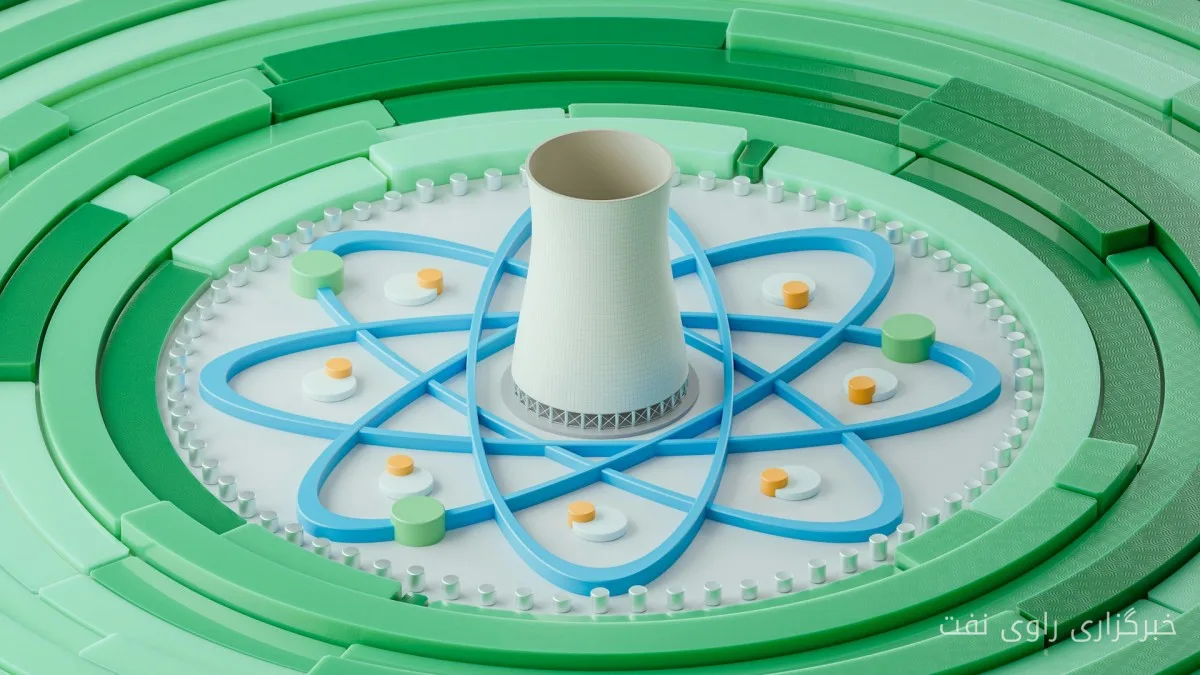
The International Atomic Energy Agency (IAEA) has revised its long-term forecast for nuclear power generation capacity, announcing that this capacity will triple by 2060. A significant portion of this capacity increase is expected to come from small modular reactors (SMRs) that will be connected to power grids.
Small Modular Reactors and Their Benefits
Small modular reactors have been introduced as a serious shift in the clean energy sector, with the potential to provide emission-free electricity around the clock at a lower cost compared to traditional nuclear power plants. In contrast, large nuclear power plants typically require substantial upfront costs and long lead times for establishment and connection. SMRs, on the other hand, are factory-built and produced with the same specifications before being installed on-site.
Read more: Approval of the design of a multi-purpose fuel supply system by Hanwha Ocean
Challenges and Market Growth
Despite the potential benefits, the development of small modular reactors faces challenges such as regulatory hurdles, funding shortages, and nuclear fuel supply chain issues. Although these models are relatively cheaper compared to traditional nuclear energy, they still do not realistically compete with other clean energy options like large hydropower plants and offshore wind projects.
The economic and regional opportunities for SMRs are quite significant. It is expected that 28 percent of all new nuclear capacity added by 2060 will come from these reactors. Even in the worst-case scenario, this figure drops to 23 percent. These numbers represent a substantial increase compared to previous IAEA forecasts, which indicated a 24 percent share for SMRs in new capacity at best and only 5 percent at worst.
According to the IAEA report, the highest growth in new nuclear capacity is anticipated in North America, where about 60 percent of new nuclear capacity could come from SMRs. Strong growth is also expected in Southeast Asia and Latin America and the Caribbean, with 40 percent in both scenarios.
In the United States, the Nuclear Regulatory Commission has recently approved a plan to build two SMRs at the Palisades Energy Center in Michigan. This plant is allowed to start the project before the issuance of a limited work permit, and these two reactors are expected to generate a total of 680 megawatts of electricity.
With the increasing demand for energy in the age of artificial intelligence, the SMR revolution is seen as a crucial part of the emerging energy puzzle. Given the high energy consumption of large data centers, the need for low-carbon and sustainable energy capacities is rapidly being felt. While the AI boom has led to increased demand for natural gas, the technology sector continues to invest in next-generation technologies like SMR to meet its future energy needs.
Read more: New Times Shipbuilding selects TMC to equip eight large Maersk ships · Signing of LNG supply contract with Petrobras for phase two of the Arthur Port LNG