A new report from Global Witness indicates that governments are expanding fossil fuel production capacity despite climate commitments. This contradiction is evident during the four COP meetings from COP28 to COP31, where host countries are simultaneously increasing oil and gas production.
UAE Hosting and ADNOC's Increased Activities
The COP28 meeting in 2023 was held in the United Arab Emirates, a country where the Abu Dhabi National Oil Company, ADNOC, was seeking international oil and gas deals worth approximately $100 billion at that time. This increase in trading activities occurred while the host country was responsible for leading global climate negotiations.
Read more: The Need for a 10-Year Plan for the Zayandeh Rud Basin by a Member of the Coordination Council
Azerbaijan and Increased Oil Production
A year later, Azerbaijan hosted COP29, and the executive director of this meeting attempted to leverage its position to facilitate discussions on new oil and gas contracts. At the same time, the trading activities of the State Oil Company of Azerbaijan increased during this period.
Brazil and Drilling Permits in the Amazon
At COP30, Brazil, as the host country, issued offshore drilling permits near the Amazon Basin for its national oil company, Petrobras. This decision was part of a broader oil exploration program aimed at increasing production and developing new energy resources.
Turkey and Major Energy Projects
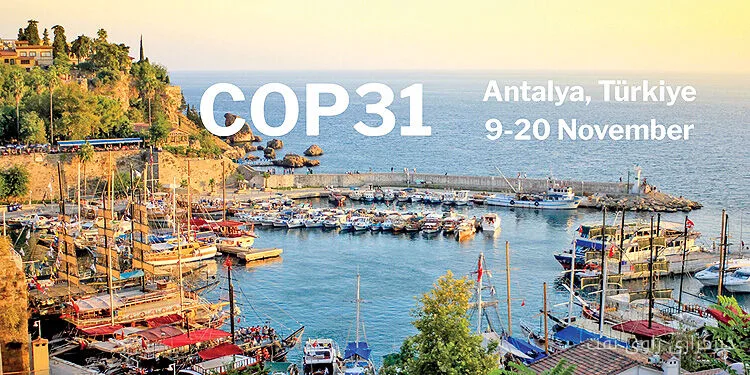
Now in 2026, Turkey, along with Australia, is hosting COP31, and studies show that the oil and gas companies in both countries also have plans to increase production. Turkey's oil company, TPAO, predicts it will increase its natural gas production from 8 billion cubic meters in 2025 to over 22 billion cubic meters by 2035, nearly a threefold increase.
TPAO's Global Plans and International Collaborations
Additionally, TPAO forecasts that by 2050, it will produce over one billion barrels of oil equivalent from fields that have not yet been approved for development. Alparslan Bayraktar, Turkey's Minister of Energy and Natural Resources, has set goals to increase black gold production to 500,000 barrels per day by 2028 and ultimately to one million barrels per day.
Australia and Development Plans
In Australia, companies Woodside and Santos are also planning to increase production. Estimates suggest that Woodside intends to raise its liquefied natural gas production to about 40 million tons per year by 2032, while Santos will increase its crude oil production to about 46 million barrels per year by 2035.
Contradiction in Energy Policy and Climate Commitments
These recurring patterns and contradictions in policy indicate that host countries of climate meetings are simultaneously expanding fossil fuel production capacity. The International Energy Agency and scientific assessments from the United Nations have warned that the development of new oil and gas production is not compatible with the pathways necessary to limit global warming to around 1.5 degrees Celsius.
Read more: The Risk of Pollution from Oil Discharge Pipes through Fuel Tanks · The EU's Policy on Oil Drilling in the Arctic Becomes Softer