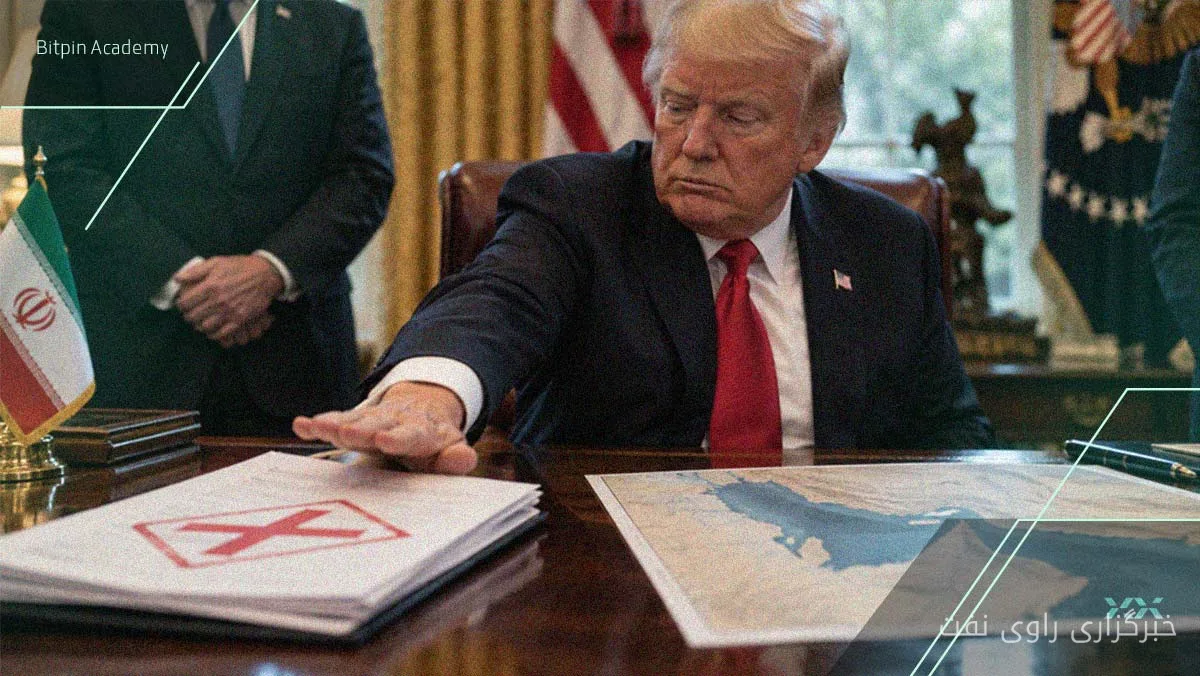
Donald Trump, the President of the United States, has rejected Iran's seven-day proposal to reopen the Strait of Hormuz. This proposal, which was conveyed to the U.S. through mediation by Qatar, was aimed at reducing regional tensions and increasing the flow of oil from this strategic waterway. If agreed upon, both parties could have initiated broader negotiations.
Consequences of Rejecting Iran's Proposal
Iran's proposal included lifting the blockade of the country's ports, releasing blocked financial resources, and setting aside U.S. oil sanctions. However, Trump has rejected this proposal, which has once again brought political risk back to the oil market. Currently, traffic in the Strait of Hormuz is far from pre-war conditions, although shipping data indicates an increase in oil exports from this waterway.
Current Status of Oil Exports from the Strait of Hormuz
According to Kpler data, the flow of crude oil exiting the Strait of Hormuz reached 33.7 million barrels in the week starting September 20. This amount was transported by 19 oil tankers, 17 of which were very large crude carriers (VLCCs). Most of the shipments were related to Saudi Arabia and Iraq. Despite this, vessel traffic is still not close to normal conditions, as data shows that on one day of the week, only 9 cargo ships passed through.
Before the war, an average of 125 large commercial ships passed through the Strait of Hormuz daily. Therefore, the recent increase in traffic does not yet mean a full return to normal conditions. Meanwhile, Saudi Arabia has resumed operations of the East-West pipeline, which allows oil to be transported to the Red Sea and bypass the Strait of Hormuz.
Future Developments and Impact on the Oil Market
The gradual return of this route to the market is very important, as part of Saudi oil can be transferred to the Red Sea without passing through Hormuz. Additionally, forecasts indicate an increase in oil supply in the coming years. Fitch Ratings predicts the average selling price of Brent oil to be $87 in 2026 and $70 in 2027. However, the price trajectory depends on political developments and the status of negotiations.
In the short term, the market will closely monitor Washington's official response to Iran's proposal, the actual flow of oil through the Strait of Hormuz, and the speed of Saudi Arabia's export recovery. If the negotiation path remains closed or if there is a disruption in Middle Eastern exports, the likelihood of upward pressure returning to the oil market will increase.
Read more: 6% increase in heavy fuel oil stocks in Singapore · U.S. and Iran negotiations to break the Hormuz deadlock have resumed