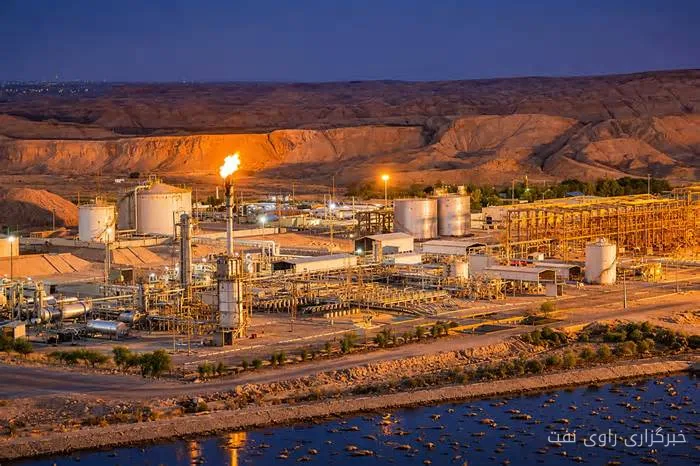
Dehloran Petro Refinery, also known as NGL 3100, is located in the Dasht Abbas region and the Cheshmeh Khush area. This complex is designed to optimize the use of associated gases from oil fields in the western part of the country and plays an important role in the oil and gas value chain.
Complex Capacities and Products
Based on the designed capacities, Dehloran Petro Refinery can produce several important hydrocarbon and industrial products after receiving feedstock at the nominal level. These products, in addition to having independent economic value, are of special importance in the supply chain of raw materials for the petrochemical industries. The designed capacity of this complex is such that it can process 240 million cubic feet of feedstock daily, thereby producing valuable products.
Read more: Brent oil price rises to $114 and developments in the Strait of Hormuz
The feedstock required for Dehloran Petro Refinery is supplied from the associated gases of various oil fields. Fields such as Dehloran, Danan, Azar, Cheshmeh Khush, Paydar, and Paydar West are among the sources of associated gases for this complex. Sustainable feedstock supply is the most important prerequisite for the economic operation of this complex; as a reduction in received feedstock can directly affect the company's production and revenue.
Difference Between Dehloran Petro Refinery and Dehloran Petrochemical
It is important to consider the difference between Dehloran Petro Refinery and Dehloran Petrochemical. Dehloran Petro Refinery operates as a collection and processing unit for associated gases, and part of its products, especially C2+ cuts, can be used as feedstock for downstream units. In contrast, Dehloran Petrochemical is an independent project in the downstream chain that will produce products such as ethylene, polyethylene, and polypropylene using the supplied feedstock.
The designed capacity of the olefin unit of Dehloran Petrochemical is reported to be about 625,000 tons per year, and the capacity of its polypropylene unit is about 160,000 tons per year. Due to the incomplete downstream project, part of the C2+ cuts produced by Dehloran Petro Refinery has been transferred or sold to Bandar Imam Petrochemical Company. This indicates the importance of completing the downstream chain for fully utilizing the economic capacities of the region.
Despite the significant capacity of Dehloran Petro Refinery, its actual utilization rate at various times is usually reported to be less than the designed capacity. According to the CEO's statements, at certain times, the amount of received feedstock has dropped to less than 45% of the nominal capacity. The economic break-even point of this complex is reported to be around 70%, highlighting the importance of increasing received feedstock and improving utilization.
In Shahrivar 1405, a feedstock supply contract was signed with the National Iranian Oil Company to support the sustainable supply of feedstock for the complex. However, the impact of this contract should be assessed based on the actual delivery of feedstock and production increases.
Economic Importance of Dehloran Petro Refinery
Dehloran Petro Refinery is not limited to the production of hydrocarbon products. This project is important for the region's economy and the country's oil and petrochemical industry in several ways: preventing resource waste, supplying feedstock for petrochemical industries, creating added value, regional economic development, and strengthening the energy value chain.
As one of the important capacities of the oil and petrochemical industry in the western part of the country, Dehloran Petro Refinery can play an effective role in collecting associated gases, producing valuable products, and supplying feedstock for downstream industries. However, the full realization of the project's goals depends on sustainable feedstock supply, increased utilization capacity, economic management, and completion of the downstream chain. Ultimately, the main criterion for the success of this complex will not be merely the nominal capacity and installed equipment, but the actual production, product sales, and achieving sustainable profitability.
Read more: Fire on five oil tankers and a tugboat in the Strait of Hormuz · Strengthening the ownership position and independence of oil pension funds