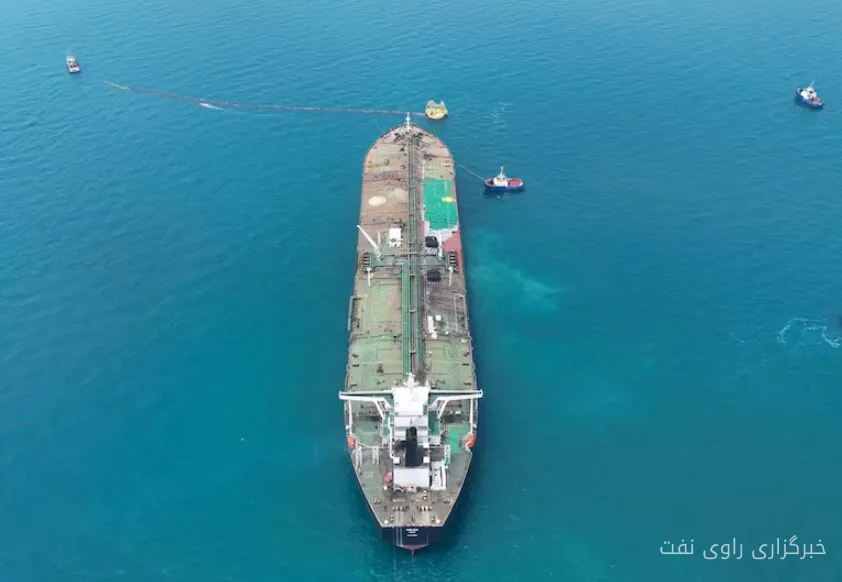
Russian crude oil exports from terminals located in the Baltic and Black Seas are expected to significantly decrease in November 2023. This reduction is due to Russian refineries' plans to increase diesel production following the completion of maintenance operations and to fulfill their commitments under the agreement with the United States.
Projected Export Decrease
Traders in this regard have predicted that maritime crude oil exports from Russia, including the transit of Kazakh oil through the Russian pipeline network, will face a daily decrease of 100,000 to 200,000 barrels compared to the previous month. This reduction is due to refineries focusing on diesel production, which is influenced by the recent agreement between Russia and the United States to stabilize global markets.
Read more: Transformation in India-U.S. Cooperation in the Oil and Energy Sector
Impact of Agreement on Diesel Exports
On October 9, 2023, Russia and the United States agreed to manage diesel exports. This agreement followed disruptions in Middle Eastern supply due to the U.S. and Israeli regime's war against Iran, which resulted in fuel shortages and rising prices in the global market. The Russian government has also allocated quotas for diesel exports to exporters, prompting refineries to increase their diesel processing and production in the second half of this month.
Following this agreement, the U.S. lifted some sanctions on Russian fuel exports, which could have significant impacts on the global oil market. However, traders believe that uncertainties about supply will continue in November. The attack on Russian energy facilities by Ukraine may also be another factor affecting oil exports.
Decrease in Urals Oil Production and Exports
Recent data from the Organization of the Petroleum Exporting Countries (OPEC) indicates a decrease in Russian oil production. The country has lowered its oil production forecast for 2026 to the lowest level in 17 years. Traders have also pointed to existing risks in the Black Sea, which have led to reduced oil exports from the port of Novorossiysk. Additionally, estimates show that a delay of about three weeks in loading has impacted the overall export volume from western terminals.
Furthermore, it is expected that Russian Urals oil exports via the Northern Sea to Asia will decrease. Deteriorating weather conditions in November may lead to the end of the shipping season on this route, which could further reduce oil exports.
Read more: Sanctioned Oil Tankers Turn to Oil Exports from the Persian Gulf · Minister of Oil Begins Energy Cooperation with Russia