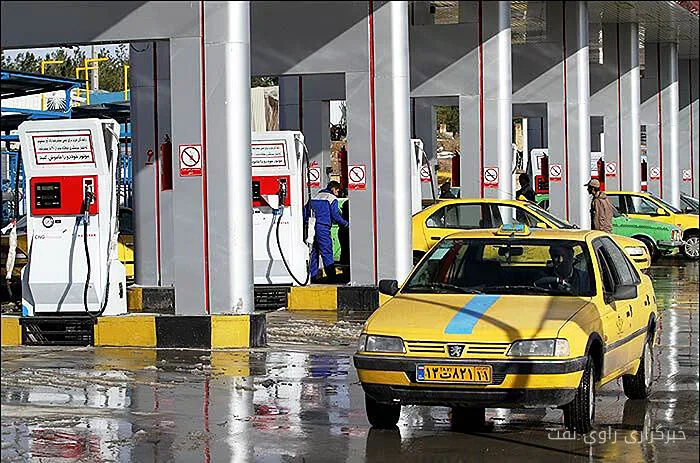
Controlling gasoline imbalance and strengthening the resilience of the country's fuel basket in the new energy management strategy involves diversifying consumption and restoring the share of compressed natural gas (CNG). Recent experiences with smart and non-price policies show that relying on existing infrastructure and reviving this strategic capacity can significantly reduce pressure on gasoline consumption, maintain strategic reserves, and enhance energy security without causing economic shocks.
CNG Consumption Trends and Decline
Analysis of fuel consumption trends shows that in the years 1399 and 1400, the daily consumption of CNG in the country reached about 24 million cubic meters. However, due to price stabilization and a reduction in the price gap between gasoline and CNG, this figure dropped to 15 to 16 million cubic meters per day, leaving a significant portion of this industry's capacity untapped. This decline in consumption occurred despite over $3 billion being invested in the country's CNG infrastructure.
Increasing Capacity and Production of Dual-Fuel Vehicles
In the fourteenth government, a change in management approach prioritized the revival of national capital; in this government, the conversion of vehicles to dual-fuel has seen a 64% increase (in the conversion rate of vehicles in 1404 compared to the two-year average of 1402 and 1403). Currently, about 4.3 million vehicles have been factory-made or converted to dual-fuel.
Additionally, there is one CNG station for every 1,600 vehicles, indicating a relatively good status in terms of access to infrastructure. However, the development of stations in some less affluent areas remains on the agenda, with regions such as southern Kerman and Sistan and Baluchestan recently connected to this infrastructure.
The practical test of non-price policies and smart distribution showed that changing consumption patterns does not necessarily go through price-based paths. As a result, CNG consumption in Kerman province recorded an increase of about 30% compared to Mordad 1404. This successful experience indicates that directing high-consumption fleets towards clean and accessible fuel is a reliable solution for reducing the burden of gasoline imbalance and strengthening the foundations of the national economy.
In the latest event, nine CNG supply stations were simultaneously launched in five provinces: Sistan and Baluchestan, Isfahan, Tehran, Kurdistan, and East Azerbaijan, with an investment of over 1 trillion tomans. These stations have the equivalent function of nine small refineries and will lead to an annual saving of 118 million liters of gasoline after one year of operation.
Read more: Ningbo Container Loading Index Report on September 11, 2026 · 25 to 30 percent increase in household energy bills in the UK in 2027



