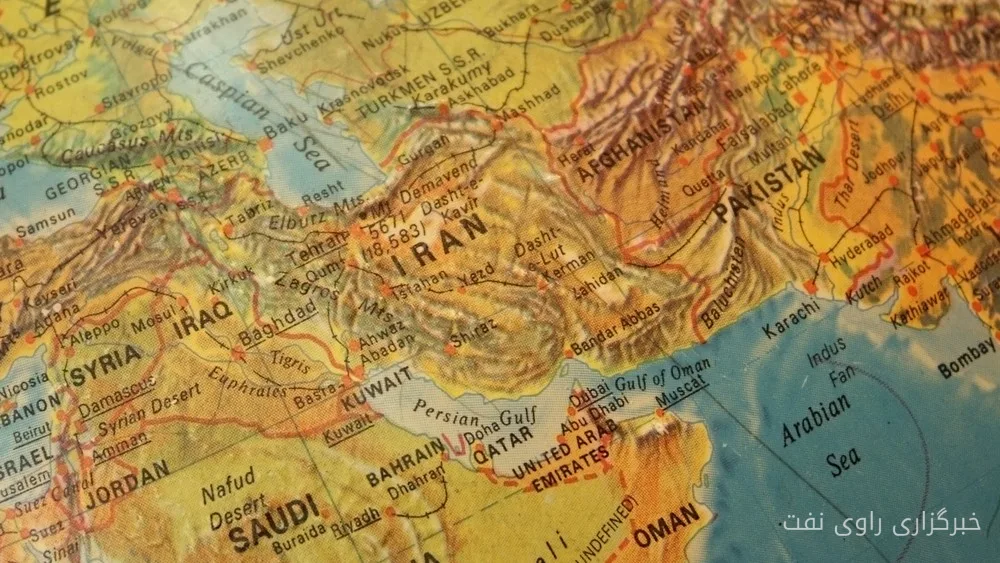
The Strait of Hormuz, as one of the most important waterways in the world, is currently on the brink of serious changes. According to predictions by U.S. Treasury Secretary, Scott Bansant, this strait will soon become a "worthless piece of water." This prediction reflects deeper changes occurring in the oil and energy industry.
Current Situation and Predictions
Before the war began, the United States imported about 500,000 barrels of oil daily from Gulf countries, which accounted for 7 percent of the country's total oil imports. This figure indicates a significant reduction in dependence on Gulf oil. According to Bansant, this strait is no longer a critical point for the United States and is more important for other countries.
Read more: CoreMarine Acquired برآوcean and Expanded Its Underwater Operations in Brazil
New Infrastructure and Bilateral Agreements
Saudi Arabia, the United Arab Emirates, Iraq, and Turkey have reached bilateral agreements to build new pipeline capacities around the Strait of Hormuz. The Saudi East-West pipeline alone has transported about 7 million barrels of oil per day to the port of Yanbu in the Red Sea during the peak of the crisis. This demonstrates the feasibility of using new routes to bypass the Strait of Hormuz.
However, recent attacks from Iraq on Saudi oil infrastructure, including the East-West pipeline, highlight the vulnerability of these infrastructures and the existing challenges in regional energy security. Additionally, Houthi attacks on Saudi oil infrastructure have faced greater skepticism, and many of these attacks have not been confirmed by the Saudi government.
Economic and Social Consequences
The war in the region has incurred heavy costs, with estimates indicating that it has cost around $38 billion in its first four months. Furthermore, forecasts predict a decrease in the GDP of Qatar and Kuwait by 5.9% and 2.9% respectively in 2026. Meanwhile, gasoline prices in the U.S. have reached $4.44 per gallon, which is 49% higher than pre-war prices.
The Strait of Hormuz remains a key point in global oil trade. Estimates show that before the war, nearly 34% of global oil trade, equivalent to 15 million barrels per day, passed through this strait. However, new routes and alternative capacities can only transport 3.5 to 5.5 million barrels per day, indicating the existing challenges in global oil supply.
Read more: Fuel Demand Situation in North and South American Ports · Saudi Arabia Increases Its Oil Exports Through Oman