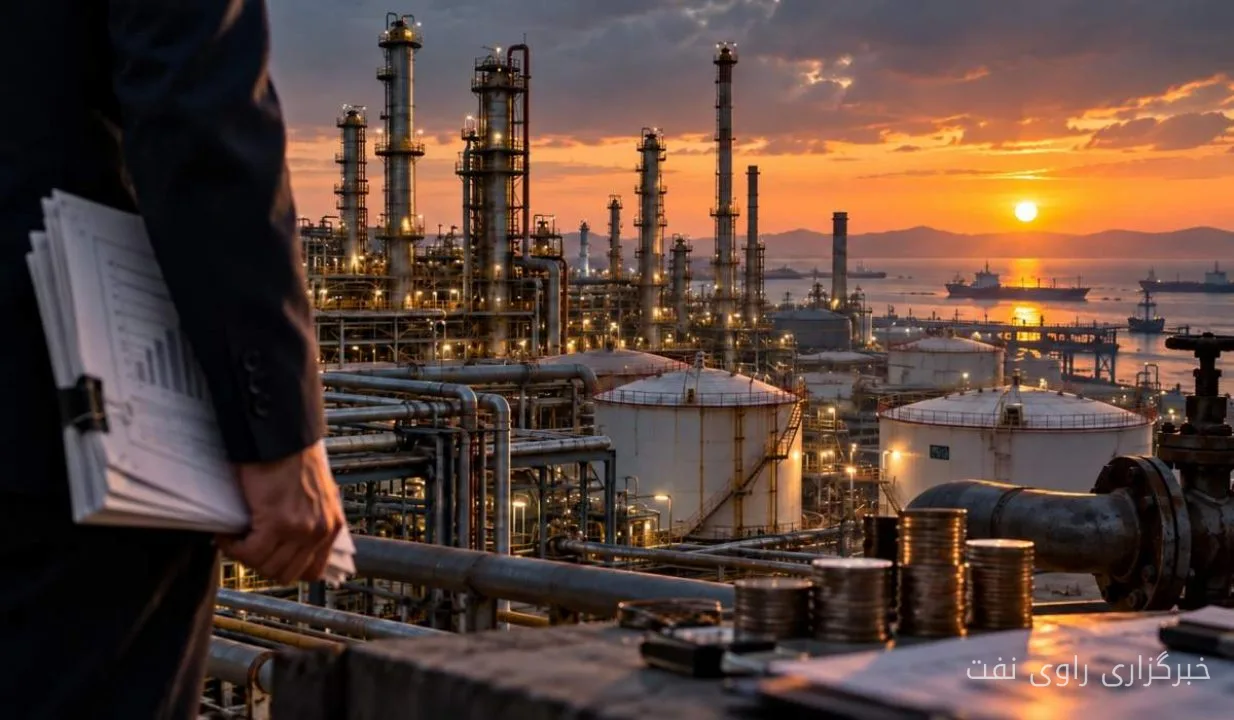
The price of Brent crude oil has decreased to $105.35 per barrel and West Texas Intermediate (WTI) to $92.49 per barrel. This price drop follows market corrections and a recent agreement between Russia and the United States to increase diesel exports to global markets.
Agreement between Russia and the United States
The recent agreement between Russia and the Trump administration has led to a temporary suspension of some fuel-related sanctions against Russia. The goal of this agreement is to facilitate the flow of petroleum products, including diesel, to global markets. However, analysts at ING believe that the market is skeptical about this agreement and point to the continued Russian attacks on Ukraine's energy infrastructure.
Read more: Kermanshah on the path to becoming a logistics and petrochemical hub in the west of the country
Security concerns in the Persian Gulf
Despite the potential increase in supply from Russia, traders remain concerned about security risks in the Persian Gulf. Recent attacks on Riyadh airport and insecurity for tankers near the Strait of Hormuz have heightened fears of disruptions in one of the world's key energy transit routes. Analysts at KCM Trade state that the market is currently more worried about the security of pipelines and ships than promises of increased supply.
On the other hand, the OPEC secretariat has pointed out structural challenges in this area. Haitham Al-Ghais, OPEC's Secretary General, has identified rising insurance and transportation costs as a barrier to the smooth movement of oil. Additionally, OPEC has revised its forecast for oil demand growth this year from 1.4 million barrels per day to 400,000 barrels per day. These changes could exert additional pressure on prices in the long term.
Overall, various factors including international agreements, security concerns, and structural challenges in the oil and energy industry are influencing price volatility. In this situation, traders must closely monitor market developments and security conditions to make better decisions.
Read more: Hamid Bord emphasized the revival of 100 million cubic meters of gas production capacity · Increase in attacks on tankers in the Persian Gulf and rising transportation costs



