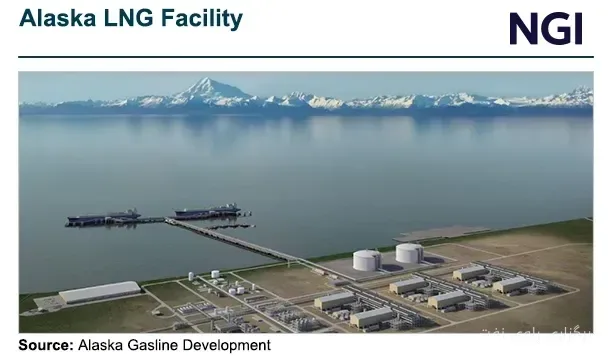
The US Geological Survey (USGS) has reported in a new study the existence of 96 trillion cubic feet (Tcf) of undiscovered and recoverable natural gas resources in the northern slopes of Alaska. These natural gas resources are considered one of the largest undiscovered natural gas reserves in the United States and could have significant impacts on the energy market and local economy.
High Potential and Technical Capacity
The USGS report is based on detailed geological assessments conducted in the region. These reserves are recoverable due to the presence of advanced technologies and high technical capabilities. This type of gas reserve is typically located beneath layers of earth and in specific conditions that require special techniques for extraction. However, the economic potential of these resources is very high due to their large volume.
Economic and Environmental Impacts
Developing these reserves could help provide more sustainable energy for the United States and reduce dependence on foreign fossil resources. Given the increasing demand for clean and sustainable energy, exploiting these resources could help lower energy prices and create new jobs in this sector. Additionally, these projects could lead to new investments in energy infrastructure.
However, extracting these natural gas resources must be done with consideration of environmental issues and their consequences. Studies indicate that extraction activities could impact local ecosystems and require thorough environmental assessments. Therefore, decisions regarding the exploitation of these resources must be made carefully, taking various aspects into account.
Read more: Reduction of gas transmission capacity in the Great Lakes due to repairs · Estimation of 96 trillion cubic feet of undiscovered gas in the northern slope of Alaska