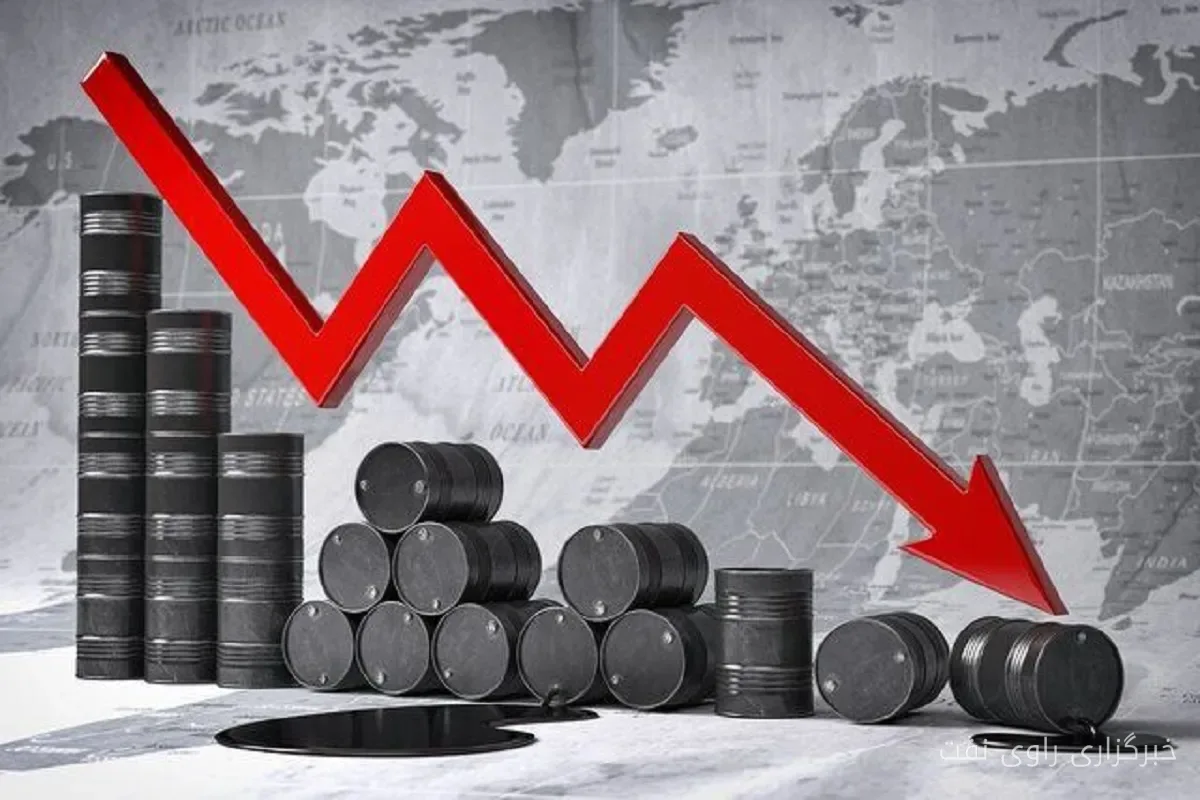
The price of Brent crude oil fell by $3.68, equivalent to 3.2%, to $109.09 per barrel. Additionally, West Texas Intermediate crude oil in the U.S. dropped by $3.43, equivalent to 3.3%, trading at $100.69.
Analysis of the Oil Market Situation
This price drop occurred at a time when Brent oil prices had reached their highest level in the past six months at the end of October. Concerns about the potential escalation of conflict between Iran and the U.S. following the U.S. midterm elections were one of the main factors driving oil prices up in recent weeks.
Read more: Abadan Oil Refinery Company announced the resolution of its unit's disruption
The continuation of discussions between Iranian and Qatari officials to reach an agreement aimed at ending the U.S. and Israeli war against Iran has been one of the most significant factors influencing recent oil market transactions. Abbas Araqchi, Iran's Foreign Minister, announced on Sunday that the goal of the ongoing negotiations is to continue consultations with Qatari mediators. He also emphasized that Tehran is prepared for both defense and diplomacy paths.
Recent Developments and Geopolitical Risks
According to energy market analysts, hopes for achieving diplomatic progress, along with the absence of significant military escalation over the weekend, have reduced some of the short-term market concerns and adjusted oil prices. Tim Waterer, a senior market analyst at KCM Trade, believes that the recent drop in oil prices can be partly seen as a technical correction following last week's significant rise. He warned that a renewed increase in political tensions surrounding Iran, especially after the U.S. midterm elections, could once again push Brent oil prices towards the $120 per barrel level.
Despite the price drop, concerns about the security of oil transportation through strategic routes remain. Attacks on tankers passing through the Strait of Hormuz have increased global energy and shipping costs, becoming one of the significant factors exacerbating uncertainty in the oil market.
In another development, the OPEC+ coalition, consisting of member countries of the Organization of the Petroleum Exporting Countries and its allies including Russia, decided on Sunday to keep oil production targets unchanged for December. This decision was in line with market expectations and indicates that members of this coalition are unlikely to implement new changes in their production policies until next year.
A drop of over 3% in oil prices during Monday's trading cannot be interpreted as the end of geopolitical risks in the energy market. The continuation of diplomatic negotiations and the reduction of military tensions in the short term have negatively supported prices, but the security situation in the Strait of Hormuz and the potential escalation of conflicts will remain determining variables in the market.
Read more: Oil price fluctuations influenced by tensions in the Persian Gulf and JP Morgan models · Global concerns over new attacks on Saudi oil facilities



