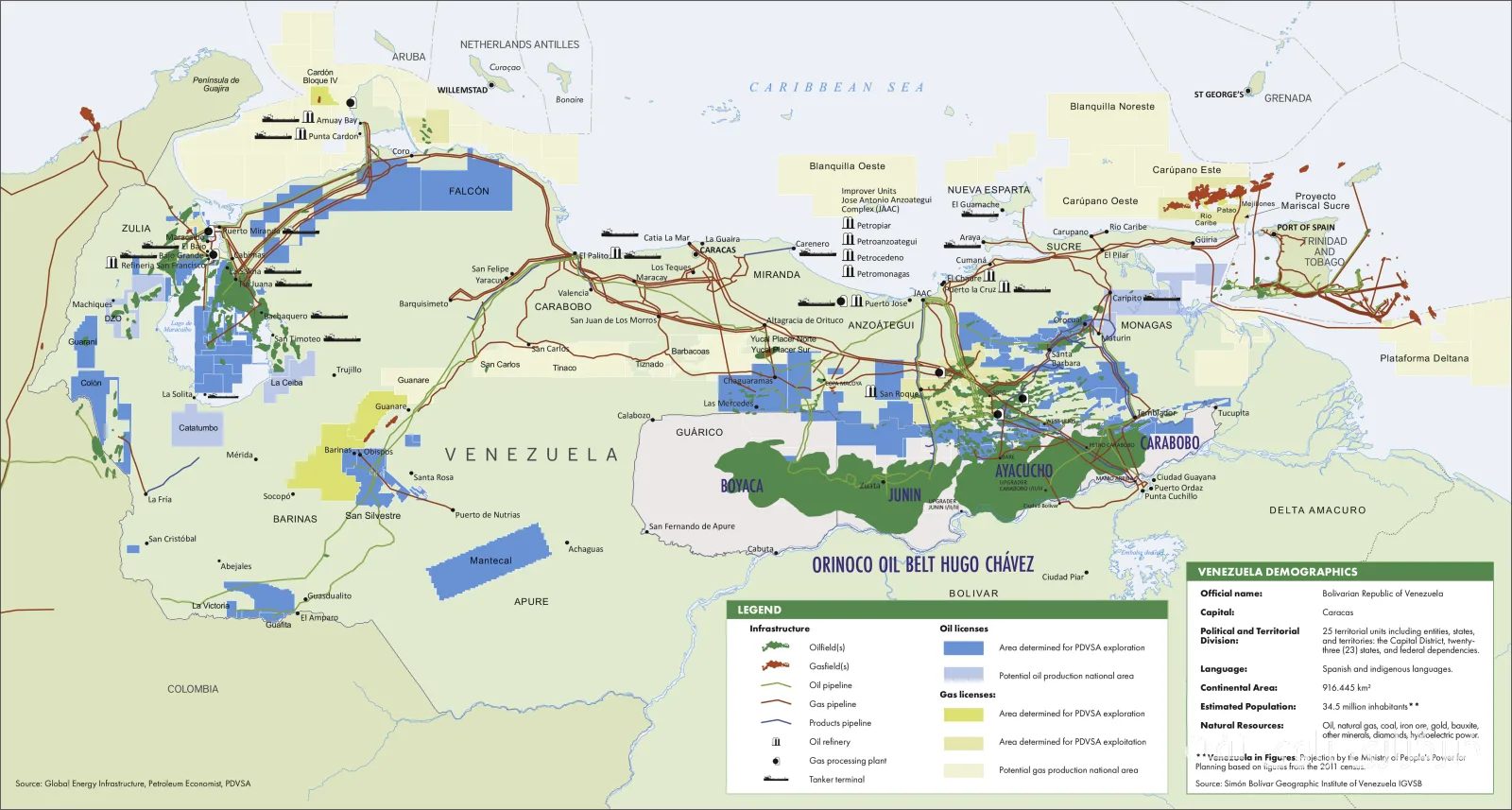
Venezuela expects to attract nearly $76 billion in investment in its oil and gas sector over the next five years. This forecast was announced by Delcy Rodríguez, the interim president of Venezuela, at the end of an energy conference in Maracaibo, the capital of the oil-rich Zulia state. More than 150 domestic and international companies gathered at this conference to discuss investment and the revival of production.
Investment Details and Agreements
Rodríguez announced that the government has signed 61 agreements under the new hydrocarbons framework and is negotiating 44 more agreements. These projects are designed to combine foreign investment with Venezuelan capital and labor. Estimates suggest that these investments could create over 324,000 direct, indirect, and conditional jobs.
Read more: Oil prices reached nearly $110
This announcement clearly reflects the ambitious dimensions of Venezuela's plans as the country seeks to rebuild an oil industry that has yet to reach its historical levels, despite holding the largest crude oil reserves in the world. Turning these commitments into production will require years of drilling and investment in aging oil fields, energy systems, and other infrastructure, as well as the need to reassure investors who are concerned about the country’s history of nationalization and political and legal uncertainties.
Challenges Ahead and Future Outlook
The effort to attract investment is increasingly intertwined with U.S.-backed efforts to revive Venezuela's vast but struggling oil industry. Washington signed an agreement with the American company Blue Energy Partners in August, which includes 17 oil fields and up to $100 billion in planned investment. The company has stated that its goal is to increase production to 500,000 barrels per day by the end of 2028 from the current approximately 200,000 barrels.
Rodríguez also noted that increased production in Zulia will gradually allow the state to become a liquefied petroleum gas producer, initially for domestic consumption and then for export. These goals present significant challenges. Chevron Corp, which recently expanded its development rights in the Orinoco Belt and updated the terms of its Venezuelan operations, announced in September that these agreements have paved the way for new investment, but there are still years of work ahead.
The company also stated that long-term growth depends on ongoing reforms and collaboration between the industry and government in improving infrastructure. Venezuela is also facing constraints, including uncertainty in power supply, aging production equipment, limited oil field service capacity, and a shortage of experienced workers, all of which could slow efforts to secure new barrels.
Read more: Petrochemical Pardis Phase One Returns to Production Cycle · Consequences of the U.S. War Against Iran on the Global Energy Market



