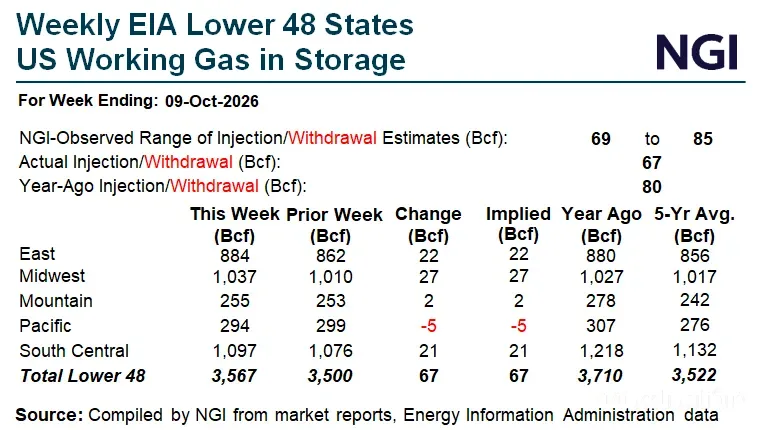
The U.S. Energy Information Administration (EIA) reported that in the week ending October 9, 2023, 67 Bcf (over 1.89 billion cubic meters) of natural gas has been injected into the country's gas storage. This injection of natural gas is considered lower compared to expert forecasts and historical averages.
Analysis of Gas Storage Status
The EIA report indicates that given the increasing demand and weather conditions, it was expected that the injection of gas into storage would be higher than this amount. In previous years, the average injection of natural gas into storage during this time frame has been around 85 Bcf. Thus, the announced figure represents a significant decline in the level of storage.
Read more: Meeting to Review Trends in Fuel Optimization and Management with Masoud Pezeshkian
Implications for the Natural Gas Market
This decrease in the level of injection could have significant impacts on the natural gas market. Given that natural gas storage has decreased due to high demand during the cold seasons, this could lead to price increases. Market analysts predict that if this trend continues, natural gas prices in future markets may come under pressure.
In the current situation, investors and traders should pay special attention to changes in natural gas storage. With increasing demand and decreasing storage, the natural gas market may experience more volatility. This situation could directly affect producers and consumers.
Future Outlook
As the cold season approaches, demand for natural gas is expected to increase, which could put more pressure on storage. If the injection of gas into storage continues in this manner in the coming weeks, we are likely to see price increases. Additionally, this decrease in storage could lead to greater concerns about gas supply in the winter.
Read more: China's Exports Reached Highest Forecast in September · Increase in U.S. Natural Gas Exports to Mexico with Unprecedented Demand



