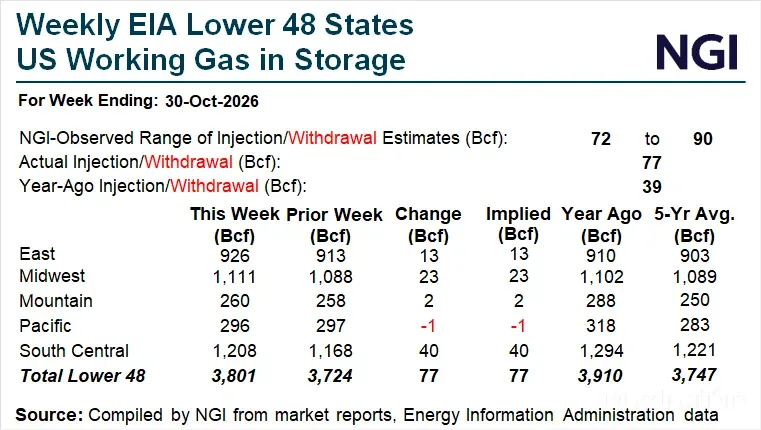
The U.S. Energy Information Administration (EIA) announced in its latest report that for the week ending October 30, 77 billion cubic feet (Bcf) of natural gas was injected into natural gas reserves in the United States. This injection amount was below market expectations and contributed to an increase in the surplus of natural gas reserves.
Injection Details and Reserve Status
While forecasts indicated that the injection should have been higher, the 77 Bcf injected was only 20 Bcf less than the historical average for this week. This situation, despite the current natural gas reserves reaching 3.708 trillion cubic feet, indicates a 12 percent surplus compared to last year.
Read more: National Iranian Gas Company Develops Gas Consumption Management Scenarios for Winter
Economic and Market Implications
A decrease in injections to natural gas reserves can have significant impacts on energy markets. Given that gas demand typically increases in the winter season, this decrease could lead to rising prices. Analysts believe that if reserves continue to decline, the market may face shortages, which could lead to higher gas prices in both domestic and international markets.
In this context, it is also essential to look at the status of U.S. natural gas production and exports. With increasing demand for liquefied natural gas (LNG) in global markets, the United States has become a key player in global energy supply. This situation, alongside declining reserves, could lead to increased competition in international markets.
Read more: Last Deadline for Pre-Sale Payment of Iran Khodro for Aban 1405 · Decrease in Demand Reduces Natural Gas Prices in the United States