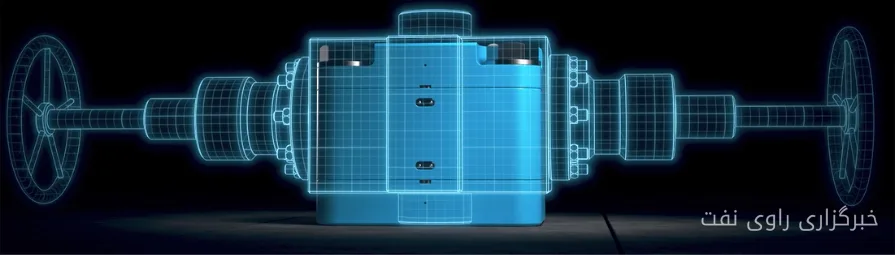
Unity has introduced a new ultra-compact control valve named the Qb valve, designed for well interventions in offshore environments with limited space. This technology is particularly applicable in wells where conventional blowout preventer (BOP) systems cannot be used.
Features of the Qb Valve Design
The Qb valve measures approximately one-third the width of conventional BOPs and can withstand pressures of up to 10,000 psi. This technology is designed for wireline, slickline, and coiled tubing operations and may also be used in drilling in the future.
Read more: ABS and lomarlabs Collaborate to Accelerate Innovative Solutions in Maritime Transportation
The design of this valve utilizes rotating rams that rotate around a central cartridge within the chamber instead of moving directly from both sides of the well. Unity has described this design as a combination of conventional BOPs and ball valves, enabling standard BOP functions to be performed in a smaller space.
Investment and Future of the Technology
Unity has invested approximately £500,000 in the research and development of this technology. The Aberdeen-based company has stated that this new system expands its pressure control offerings beyond the applications of coiled tubing, which constitute a significant portion of the existing CSS valve work.
Gary Smart, CEO of Unity, stated: "The future of well interventions will be defined by technologies that provide greater capabilities from smaller spaces. We have realized that the size and complexity of conventional BOP systems increasingly pressure operations in confined environments."
Unity has announced that its existing CSS valve will remain in the company's product portfolio, and the Qb valve is designed to expand the range of offshore intervention operations that the company can support.