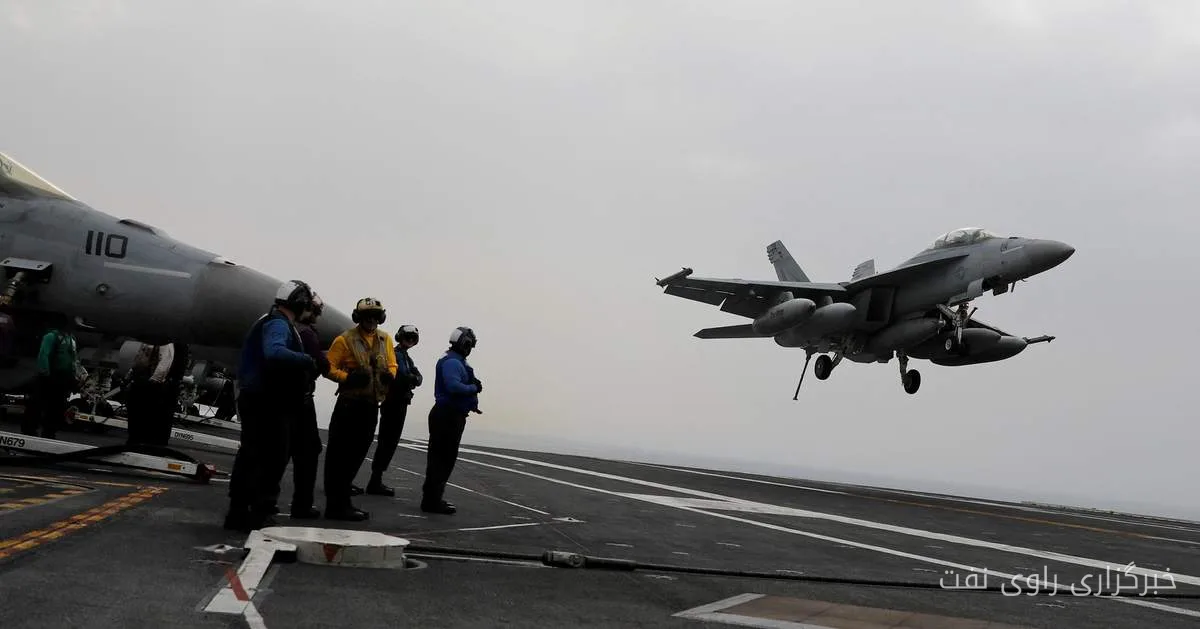
The U.S. government, led by Donald Trump, the president of the country, has decided to deploy 9,000 troops and its third aircraft carrier to the Middle East. This action is aimed at strengthening the U.S. position against Iran's nuclear program and the Strait of Hormuz, which is recognized as one of the most important waterways in the world.
Emphasis on Iran's Nuclear Program
In an interview with Time magazine, Trump reiterated the importance of preventing Iran from acquiring nuclear weapons. He said, "Iran must not obtain nuclear weapons, and this is one of the main objectives of the military operations and economic pressure by the U.S. against the Islamic Republic." These remarks come as negotiations to end the conflicts and reopen the Strait of Hormuz continue.
Read more: U.S. Energy Information Administration Addresses Natural Gas Storage Report
Military and Economic Consequences
Trump also referred to recent failures in mediatory negotiations, stating that the main disagreement between the parties remains over the sequence and nature of concessions. According to him, the Islamic Republic seeks to reduce economic pressure and return to the Islamabad agreement, but the U.S. demands specific actions regarding the nuclear program.
This situation has been significantly affected by the economic pressures imposed on Iran. Trump also emphasized that the Islamic Republic needs revenue from oil exports and is calling for the immediate reopening of the Strait of Hormuz, but this is not sufficient for an agreement.
Control of the Strait of Hormuz
Trump further added that the U.S. now has "full control" over the Strait of Hormuz, and this is one of the main reasons for the weakening of Iran's position. He stated that by disrupting the passage of ships through this waterway, Iran believed it could exert pressure on the global economy, but the U.S. changed the conditions to its advantage by establishing a maritime blockade.
These developments could impact the oil market and global prices, especially since the Strait of Hormuz is recognized as one of the most important routes for oil tankers. Given this situation, it is clear that the U.S. is seeking to strengthen its position in the Middle East and prevent the increase of Iran's nuclear power.
Read more: S&P Concerns About Guard's Financial Power in Marine Insurance · Russia Extends Diesel Export Ban Until October 31