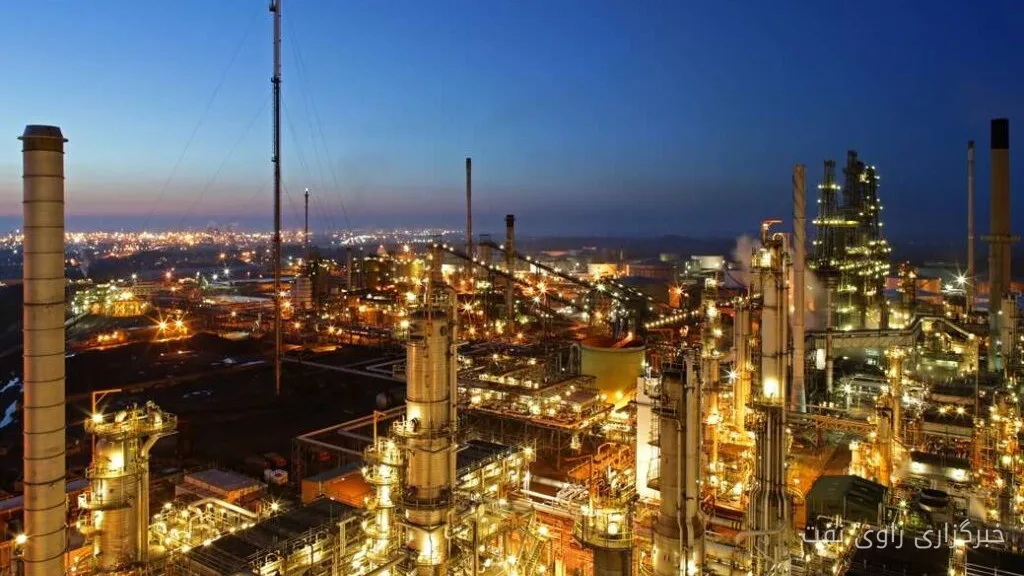
The United States government, led by Vice President JD Vance, is utilizing the Defense Production Act of 1950 to enhance fuel production at a small refinery in Tyler, Texas. This action is being taken as fuel prices in the United States have reached new record highs, and the government is facing serious challenges in fuel supply.
Details of the Defense Production Act
The Defense Production Act, enacted in response to the outbreak of the Korean War, grants the President broad powers to direct private businesses to produce materials and services essential for national defense and emergency preparedness. Vance announced at a political rally in Texas, "We want millions of gallons of commercial and military fuel to be produced from this refinery, in addition to what it currently produces." This refinery, which currently has a production capacity of 74,000 barrels per day, will soon expand using this act.
Read more: Supply of 456,000 tons of industrial and mineral products in the commodity exchange
Challenges Facing Fuel Production
As the midterm elections approach on November 3, the Trump administration has been exploring various options to increase fuel accessibility in the United States in recent weeks. From the now-lifted ban on diesel exports to an agreement with Vladimir Putin for the delivery of Russian diesel, no option has been off the table for this administration amid record diesel and gasoline prices.
Despite slight decreases in fuel prices in recent days, the average price of gasoline and diesel remains high. The national average price for a gallon of regular gasoline in the United States has set a new record for October, reaching $4.34. Additionally, the national average price for diesel has reached $6.28 per gallon, which is down from $6.31 a week ago but significantly higher than $3.65 at the same time last year.
Analysts believe that diesel prices will remain above $6 for an extended period, and the agreement with Russia for diesel supply will have little impact on price reductions. The global diesel market is under severe pressure due to Middle Eastern tensions and supply shortages from Russia. Furthermore, Russian refineries are facing challenges in fuel production due to drone attacks in Ukraine.
While wholesale diesel prices had decreased last Friday, futures prices for diesel have risen again this week, reaching around $200 per barrel in New York and London. Tom Kliza, an energy consultant at Gulf Oil, stated that the price increases in the wholesale diesel market clearly indicate a lack of confidence in Russian oil supply.
According to Patrick DeHaan, head of oil analysis at GasBuddy, wholesale diesel prices will remain high due to unchanged supply conditions from Russia, and the $6 per gallon diesel price is likely to persist for a long time.
Read more: KPC emphasizes its commitments despite challenges · Alexander Novak considers the diesel agreement with the U.S. a positive signal for the Russian economy