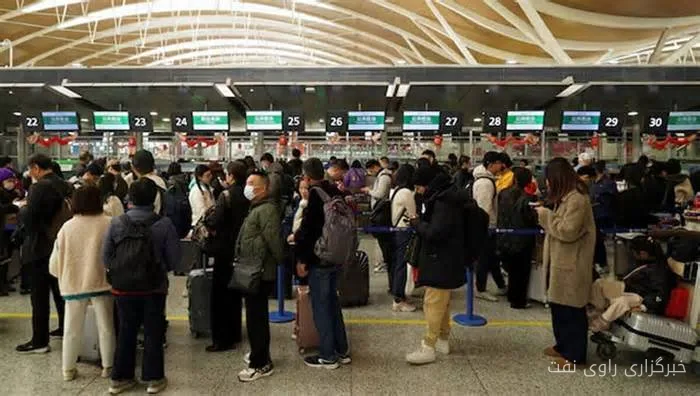
The war in the Middle East, even if it is thousands of kilometers away from China's factories, can affect the working life in Guangdong, Zhejiang, Shanghai, and other industrial cities in the country. For China's economy, the Middle East is one of the important sources of energy supply; it is also a market for selling goods and a strategic route for international trade.
The Impact of War on Employment in China
The escalation of conflicts in this region through various channels, especially rising energy costs, disruptions in maritime transport, changes in export orders, and reduced profit margins for factories, puts pressure on China's labor market. However, the impact of the war on employment in China is not uniform. Some industries face reduced orders and increased production costs, while some energy equipment manufacturers and alternative technologies may benefit from changes in trade routes.
Read more: Baltic Index Rises by 65 Points to 2805
The gradual escalation of the crisis in the first weeks of the war led to the cancellation of orders that were supposed to reach customers via the Middle East. Even factories with customers in the U.S. and Europe were affected by the consequences of the war. Oil prices increased, and the cost of transporting goods rose. In such circumstances, factory owners have limited choices to maintain their profit margins: raising prices, reducing production, delaying hiring, or cutting the workforce.
Pressure on Production Costs
Reports from the industry have documented a clear example of this situation in the city of Guangzhou. The owner of a bicycle manufacturing factory that produced for customers in the U.S., Europe, and the Middle East has halted most of its export activities and reported a 30% increase in aluminum prices and a 15% rise in logistics costs due to order cancellations from Iran. These pressures have led to a temporary halt in factory operations.
This situation clearly illustrates how the war translates from production costs to employment. A factory that receives fewer orders and pays more to produce each unit of goods has less incentive to hire new workers. Subsequently, overtime hours are eliminated, and planned hiring is postponed.
A significant portion of China's imported oil passes through the Strait of Hormuz. Estimates indicate that more than one-third of the crude oil needed by China is transited through this route. The cost of energy supply has risen since late February 2026, and disruptions in tanker passage have increased the average price of Brent oil from about $71 to $100, with this price increase rapidly affecting various sectors of China's industry.
Overall, the energy crisis quietly and gradually infiltrates the labor market, and factories that delay hiring exert more pressure on China's labor market. The current state of China's labor market is influenced by new turbulence, and attracting educated youth has become one of the important issues in economic policy-making.
Read more: Asia Hopes for the Results of the U.S. Midterm Elections · Arash Najafi Warns About the Vulnerability of Steel and Petrochemical Industries This Winter