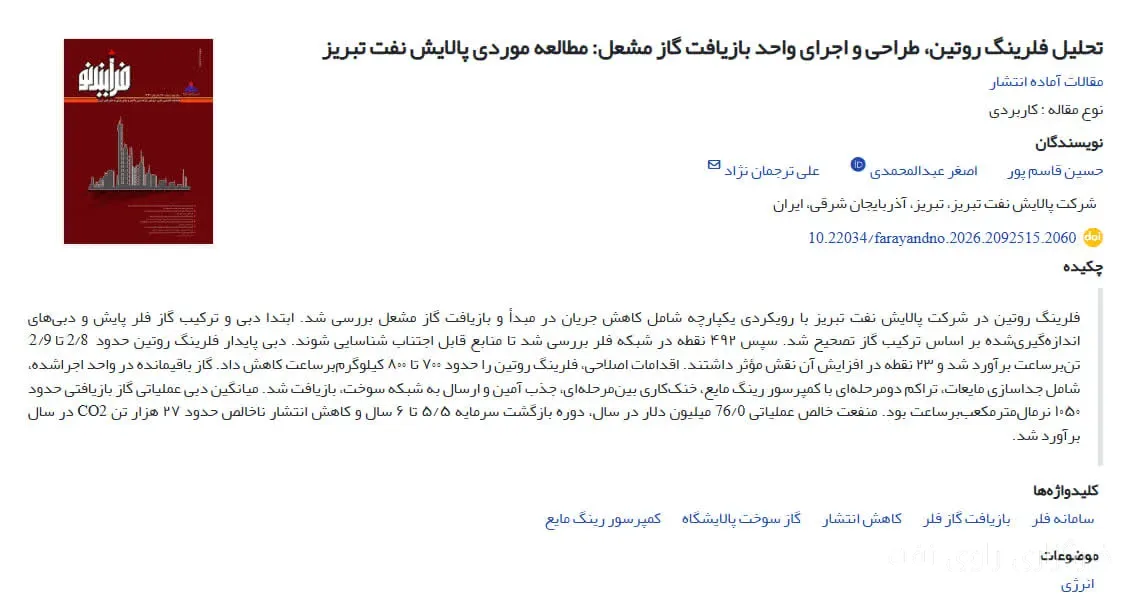
Tabriz Oil Refinery, in line with sustainable development and optimal energy resource management, has published a scientific article titled "Routine Flaring Analysis, Design and Implementation of Flare Gas Recovery Unit: A Case Study of Tabriz Oil Refinery." This article has been published in collaboration with the Engineering Projects and Development Department and the Research and Technology Department of the company, and it addresses the environmental and economic challenges of the oil industry.
Details of the Article and Its Authors
This research, authored by Mr. Hossein Ghasempour, Asghar Abdol Mohammadi, and Ali Tarjoman Nejad, describes the operational strategies of Tabriz Oil Refinery in reducing flare gases and optimizing energy consumption. The article demonstrates the capability of domestic specialists in transforming field experiences and operational activities into applicable scientific knowledge.
Read more: Financial Support for New Technologies in the Oil Industry by the Innovation Fund
Consequences of Reducing Emissions and Optimizing Energy Consumption
Reducing flare gases is considered one of the fundamental challenges in the oil industry, which not only has negative environmental impacts but also leads to increased operational costs. This article aims to reduce environmental pollutants and enhance the efficiency of refining units by presenting innovative approaches and practical solutions. These actions can help improve the economic and environmental performance of Tabriz Oil Refinery.
The Research and Technology Department of Tabriz Oil Refinery has also emphasized the importance of documenting technical knowledge and expressed its readiness to collaborate with other operational units to identify and disseminate scientific achievements and valuable experiences at national and international levels. This approach can significantly contribute to improving the quality of research and innovation in the oil industry.
Overall, this article serves as a scientific and practical reference in the field of refining industry and can act as a suitable model for other refineries in the country. The journal "Novo Process" in which this article has been published is a specialized quarterly of the National Iranian Oil Refining and Distribution Company and serves as a reference for publishing scientific and practical discussions in the field of refining industry.