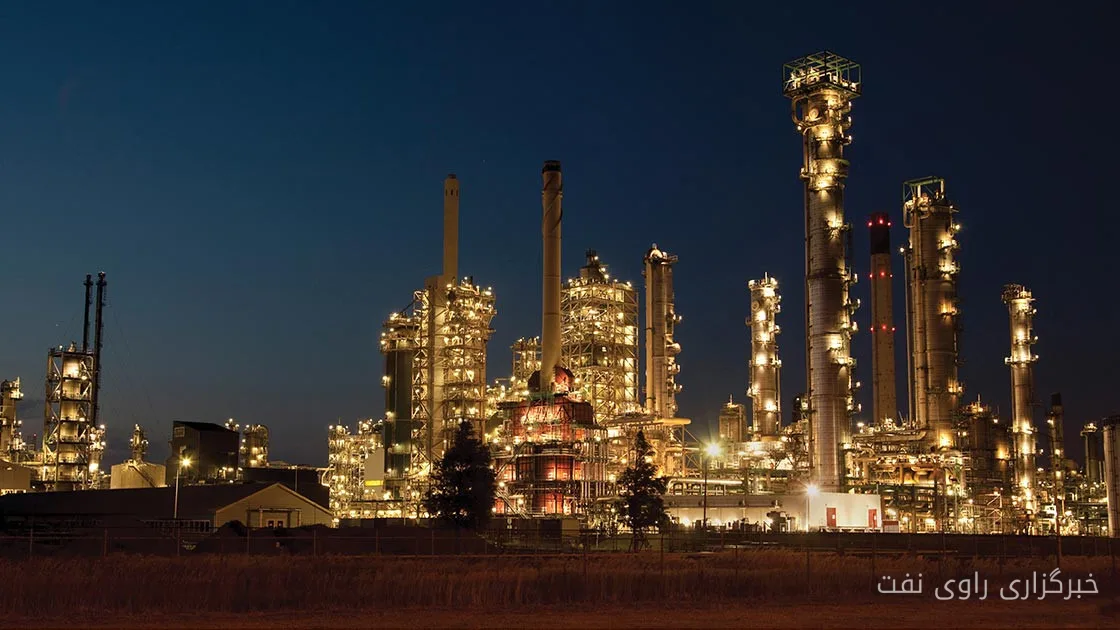
Scientists from the Korea Advanced Institute of Science and Technology (KAIST) and Georgia Tech have presented a scientific discovery that could reduce energy consumption in oil refining by 32%. This scientific advancement specifically focuses on eliminating part of the high-temperature heating process required to separate crude oil fractions.
New Filter Technology
This discovery has achieved a simple and cost-effective method for separating crude oil molecules through a polyacrylonitrile (PAN) membrane, which significantly differs from previous efforts to separate crude oil using membranes. In prior research, scientists believed that a selective layer needed to be placed on the membrane surface to aid in molecule separation, but these multilayer membranes are typically expensive and easily damaged.
Read more: Ardeshir Mazzakori announced an 11% increase in electricity supplied to energy-intensive industries
Instead of this method, the researchers decided to pass crude oil directly through an uncoated porous membrane. The PAN membrane, which is a stable and low-cost chemical polymer, is commonly used as a backing material in industrial membranes. When crude oil passes through this membrane, at room temperature, the membrane acts as a blocked filter, with heavy hydrocarbons selectively adhering to the pore walls and ultimately creating separation channels smaller than 2 nanometers.
Significant Reduction in Energy Consumption and Costs
This research shows that the PAN membrane can provide a crude oil permeability rate approximately 23 times higher than previously reported advanced membranes, maintaining stable performance for 28 consecutive days. Professor Ryan Leoli from Georgia Tech states, "One of the key challenges that membrane systems faced in separating crude oil was the lack of efficiency of membrane units. PAN membranes, with their remarkable separation mechanism, significantly increase the efficiency of membrane units to the extent that the industry must seriously consider implementing this technology."
This new technology can be easily implemented by adding a modular filter unit to refineries without the need for massive investments. These low-cost membranes can significantly reduce energy consumption and greenhouse gas emissions from refining operations. These blocked filters cannot replace complete distillation but can be used in the initial stage for separating fractions without the need to heat crude oil above 350 degrees Celsius (662 degrees Fahrenheit) from the start, thereby reducing part of the energy consumption and gas emissions in the refining process.
Process simulations in this study have shown that using the membrane as a pre-treatment step before conventional distillation can reduce energy consumption by 31.6%, carbon dioxide emissions by 37.6%, cooling water consumption by 20.7%, and operational costs by 36%. Furthermore, this membrane can also be applied in other chemical separation processes in the petrochemical industry and plastic waste recycling.
Dr. Jae-Hoon Choi and Dr. Hyuk-Joon Seo from KAIST, co-authors of this study, state, "Our goal is to precisely control this phenomenon of spontaneous pore blockage and develop it as a membrane platform for the entire refining process. We also intend to extend the technology to plastic recycling, biodiesel purification, and other sustainable chemical processes that support carbon neutrality."
Read more: Transformation of organizational processes in the Pars Energy Special Economic Zone with artificial intelligence · The price of Brent crude oil reached $92 per barrel