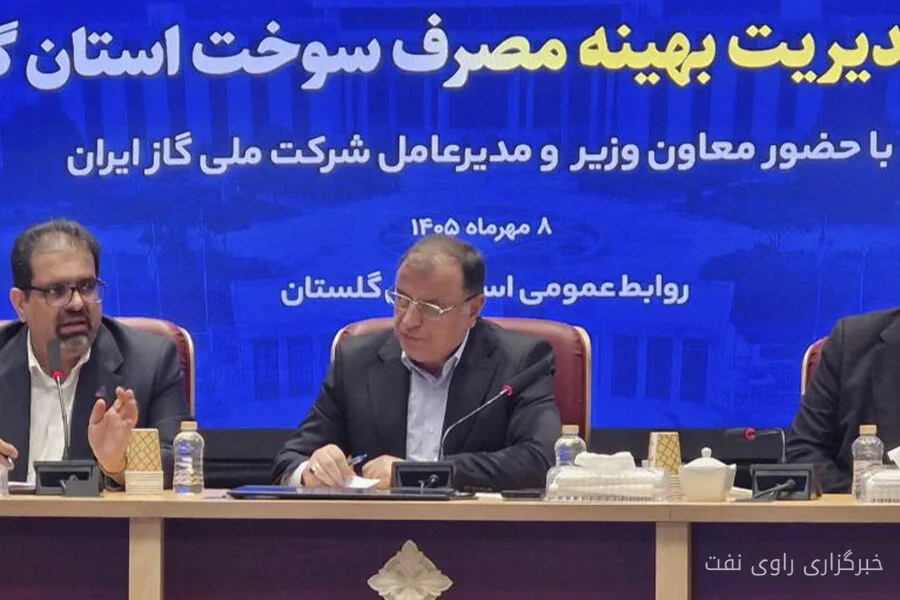
The Ministry of Oil has revived the damaged infrastructure following enemy attacks on the country's infrastructure through jihadist and round-the-clock efforts. Ali-Asghar Tahmasbi, the governor of Golestan, referred to the critical situation after the attack by the Zionist regime on March 17, 2025, during a meeting of the Fuel Consumption Optimization Management Working Group in Golestan Province, stating that this attack led to several phases being taken out of the production and transmission circuit of the country's gas.
Unceasing Efforts to Restore Facilities
Tahmasbi emphasized the unceasing efforts of government officials in the gas industry and the Ministry of Oil, stating that a significant portion of the facilities and technical equipment that had been taken out of service were successfully returned to the cycle in the shortest possible time. He deemed this level of effort worthy of special appreciation.
Read more: 392,000 tons of steel and petrochemical products offered in the commodity exchange
Crisis Management and Maintaining Gas Flow
The governor of Golestan stated that today's management in the gas industry is akin to "walking on a minefield," asserting that the managers of the National Iranian Gas Company are working diligently to manage the imbalance in the household and small industries sectors. The continuity of gas flow under conditions where the enemy targeted the main infrastructure demonstrates the successful and intelligent performance of the Ministry of Oil.
Tahmasbi also referred to the weekly crisis management meetings held in collaboration with the Ministry of Interior's Urban Development Department, stating: "In Golestan Province, 7 critical situations have been identified, and precise operational scenarios have been developed for each level of pressure drop."
He added: "To ensure the country's food security, which partly depends on supplying fuel to 2,800 bakeries, poultry farms, and greenhouses in the province, directives have been issued to governors and supervisory agencies to ensure the availability of secondary fuel. Additionally, given the limitations of the fuel supply fleet, we require the allocation of tankers and auxiliary fleets from other provinces to keep the province's fuel reservoirs full during the winter peak."
Read more: Seyed Ismail Hosseini explained the reconstruction process of the damaged oil facilities · Exploring the capacities of oil and gas cooperation between Iran and Azerbaijan



