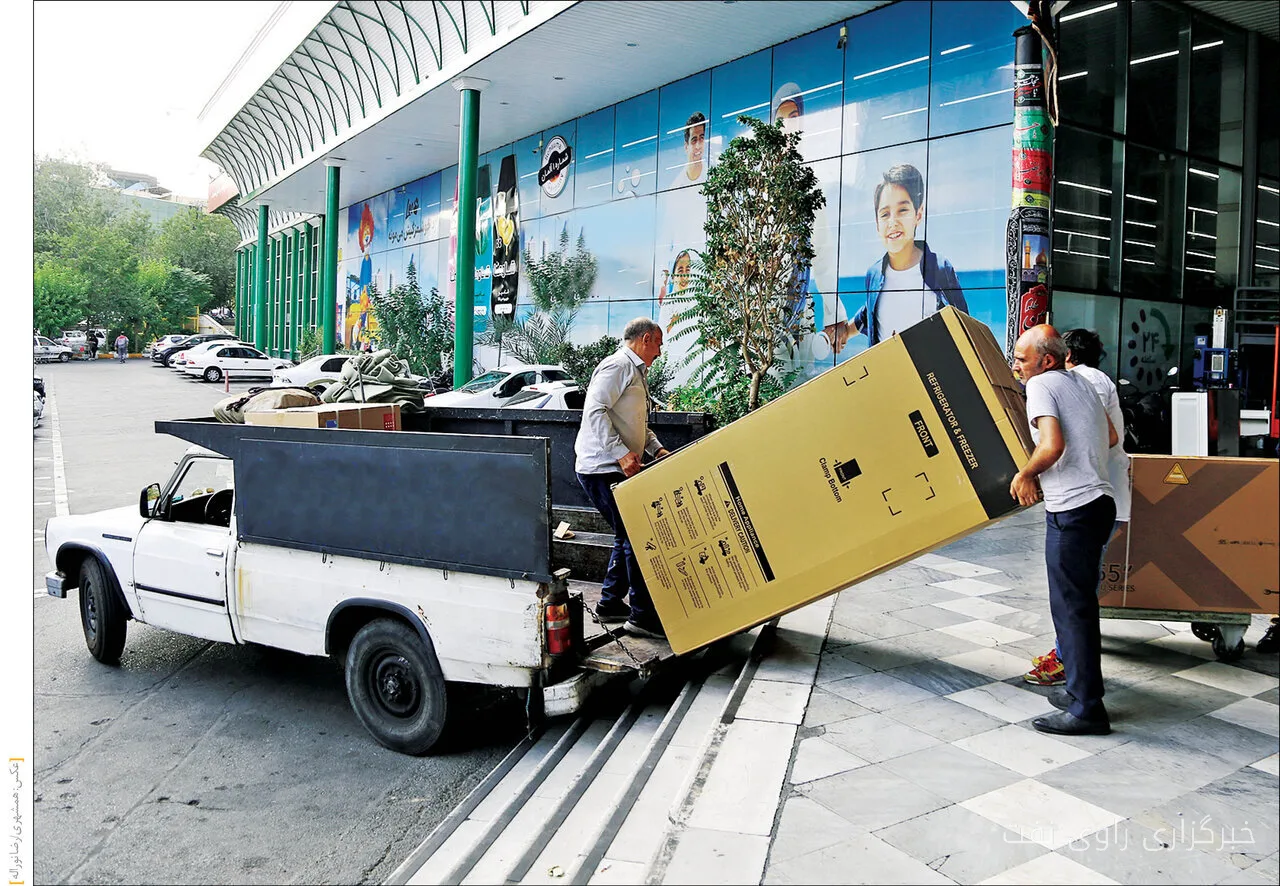
The liberalization of home appliance imports from South Korean brands has recently reignited the discussion on durable consumer goods imports in the Iranian economy. According to the explanations from the Trade Development Organization, this decision does not mean the official liberalization of large home appliance imports, but rather that the restrictions on brand and origin for some imports through border cooperatives have been lifted. Official and widespread imports of large home appliances remain prohibited.
Economic Impacts of Import Liberalization
Hakem Memkan, a member of the Economic Commission of the Parliament, has indicated that if producers fail to meet their commitments to supply parts, there is a possibility of issuing import permits for four types of home appliances up to a value of $500 to $600 million. These statements come at a time when the Iranian economy is facing currency restrictions, sanctions, and a decrease in purchasing power. Consequently, questions have arisen regarding the appropriate timing for liberalizing imports and its impacts on the domestic market.
Read more: Baltic Sea Index Increases by 8 Points to 3148
The experience of economic sanctions against Iran shows that these sanctions are not limited to government accounts and banking transactions, but also affect the production and employment chain. Richard Nephew, a former senior U.S. government official, has pointed out in his book the effects of sanctions on manufacturing jobs and export revenues. This highlights the importance of decision-making regarding production and imports in a sanctioned economy.
State of the Home Appliance Industry
The home appliance industry in Iran is no longer limited to a few assembly factories. According to the Iranian Home Appliance Industries Association, this industry has created about 300,000 direct jobs and one million indirect jobs, with approximately 600 active units. The average depth of domestic production in this industry is about 65%, and the market turnover for home appliances is estimated at nearly $6.5 billion.
However, the home appliance market also faces the phenomenon of smuggling. Estimates indicate that the volume of smuggling of these goods in recent years has ranged between $1.6 to $2 billion. In this context, import policies must be designed to enhance transparency and legal competition and to prevent the entry of goods lacking after-sales services and non-compliance with consumer rights.
Supporters of domestic production emphasize reducing currency dependency and saving foreign currency. The market for three types of goods—refrigerators and freezers, washing machines, and dishwashers—is valued at $2.5 billion, and domestic production of these goods could save about $1.8 billion in foreign currency. However, producers also face currency restrictions, and in the year 1404, the allocation of currency for this industry has decreased by about 41%.
Therefore, the timing and import policies require careful consideration and thorough examination. Should part of these resources be directed towards importing final goods similar to domestic production at a time when currency resources are limited? These questions and others need more attention from policymakers.
Read more: The United Nations announced that global fuel subsidies could exceed $1 trillion · Non-farm employment in the United States decreased with 29,000 new jobs



