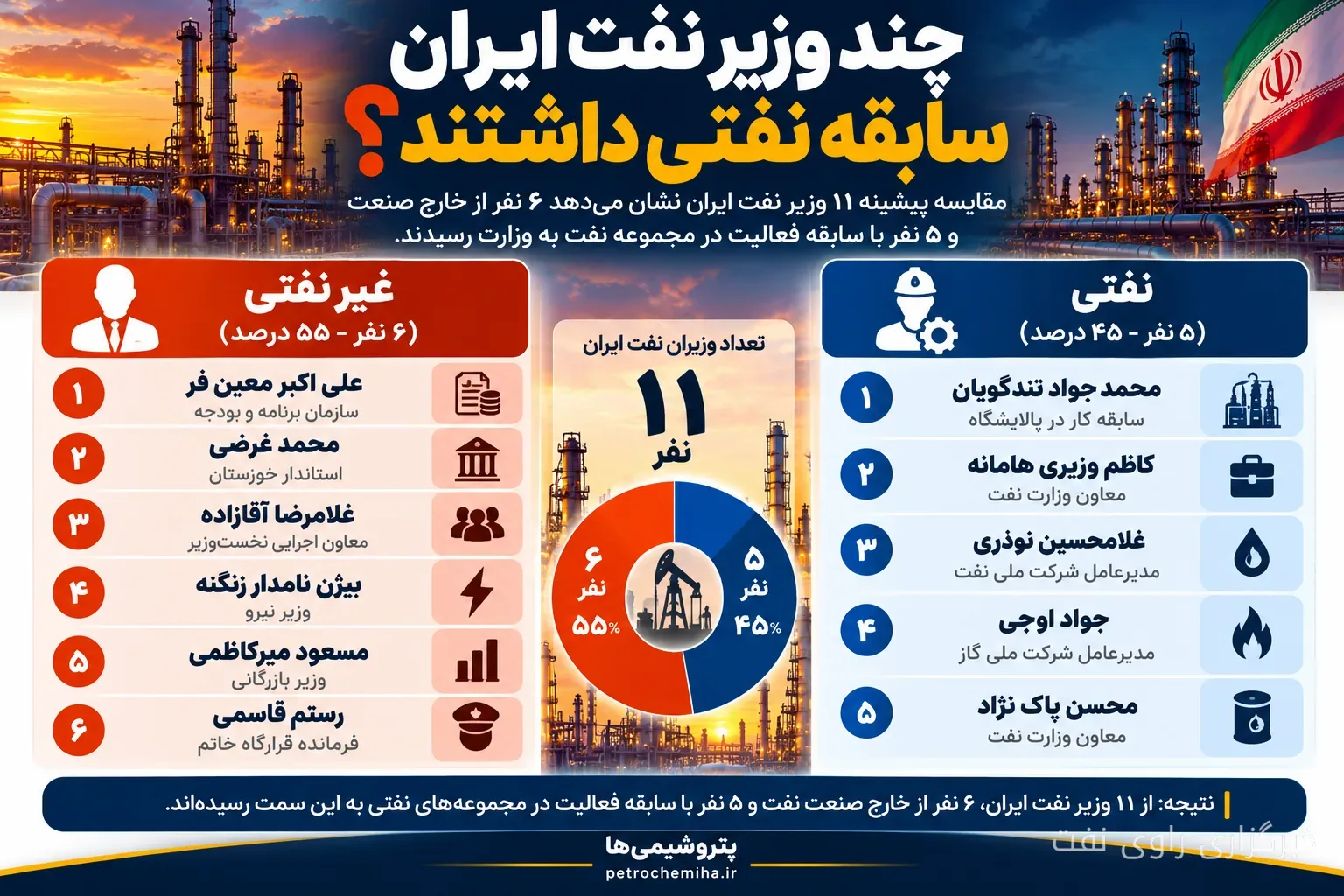
Reviewing the backgrounds of Iran's oil ministers from the perspective of experience and birthplace provides interesting information about the path to this important responsibility. Among the 11 oil ministers of Iran, 6 came from outside the oil industry, while 5 had experience working in oil-related organizations.
Ministers with Non-Oil Backgrounds
In the group of ministers with non-oil backgrounds, names such as Ali Akbar Mo'eenfar, Mohammad Gharazi, Gholamreza Aghazadeh, Bijan Namdar Zangeneh, Masoud Mir Kazemi, and Rostam Qasemi stand out. These individuals primarily have experience in the fields of planning and budgeting, executive management, government activities, commerce, and military. For example, Bijan Namdar Zangeneh is recognized as one of the most experienced oil ministers in Iran and has played an important role in the country's energy policies.
Read more: Readiness of South Pars Gas Refineries for the Cold Season
Ministers with Experience in the Oil Industry
In contrast, ministers such as Mohammad Javad Tondgouyan, Kazem Vazirihamaneh, Gholamhossein Nozari, Javad Oji, and Mohsen Paknejad fall into the category of ministers with experience in oil-related organizations. These individuals have had experiences in the operational, managerial, and executive sectors of this industry, which can contribute to a better understanding of the challenges and opportunities in the oil and energy sector.
For instance, Javad Oji, as the current oil minister, brings significant experiences from his previous tenures in the oil industry, and there are high expectations for him to help improve the current situation of this sector.
Comparing the birthplaces of the oil ministers shows that 7 of them were born in Tehran and Fars. Tehran, with four ministers, has the highest number. This may indicate a managerial concentration in the capital and its influence on major decision-making in the oil sector.
In conclusion, it can be stated that the selection of Iran's oil ministers has always been influenced by diverse experiences. These selections can, on one hand, help improve the performance of the Ministry of Oil, while on the other hand, they may also bring challenges. Therefore, evaluating the performance of ministers is not limited to their professional backgrounds and requires a thorough examination of their records and results during different periods.
Read more: The Status of Ship Fuel Supply in the Gulf of America Affected by Weather Conditions · Kambiz Sefati Announced the Improvement of Safety in the Gas Condensate Tanks of the Fifth Refinery