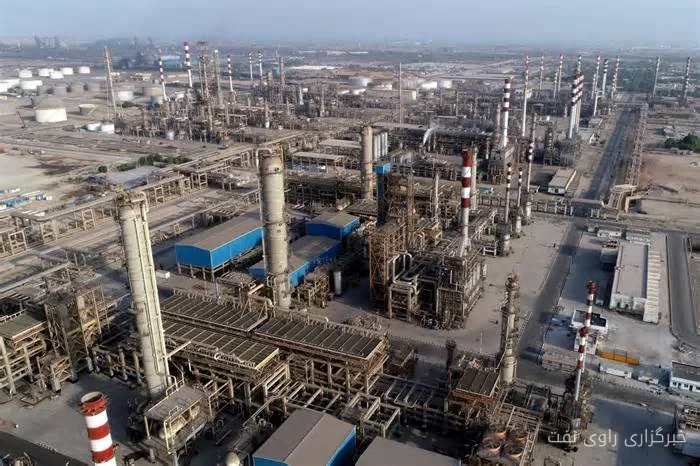
The Phase 13 refinery of the South Pars Joint Field, with a daily production capacity of 56 million cubic meters of natural gas and 75,000 barrels of gas condensate, has entered a path of sustainable production. The Deputy of Development Projects of the Pars Oil and Gas Company announced the completion and delivery of a set of equipment and units for this refinery and provided more details about this key project.
Completion of Equipment and Units of the Refinery
The Deputy of Development Projects of the Pars Oil and Gas Company announced that the executive activities and final commissioning of various sections of Phase 13 refinery have been completed, and all necessary equipment for the operation of this refinery has been fully delivered. This project was initiated to increase the production of gas and gas condensate in the South Pars Joint Field and is now close to achieving sustainable production goals.
Read more: Iran's daily oil production capacity reached 3 million and 715 thousand barrels
Various Aspects of the Project and Its Implications
Phase 13 refinery, as one of the key projects in the country's oil and gas industry, plays a significant role in ensuring domestic energy supply and reducing dependence on fuel imports. With the operation of this refinery, it is expected that the country's natural gas production capacity will significantly increase, thereby adequately meeting domestic energy needs.
This project will not only contribute to increasing gas production but will also lead to improved economic conditions in the region and job creation. Additionally, given the importance of the South Pars Joint Field in supplying the country's energy, this refinery can serve as a model for other similar projects in the oil and gas industry.
Read more: The Engineering Department of the Ministry of Oil invited experts to develop international standards · Touraj Dehghani announced the revival of part of the gas production capacity of South Pars by winter



