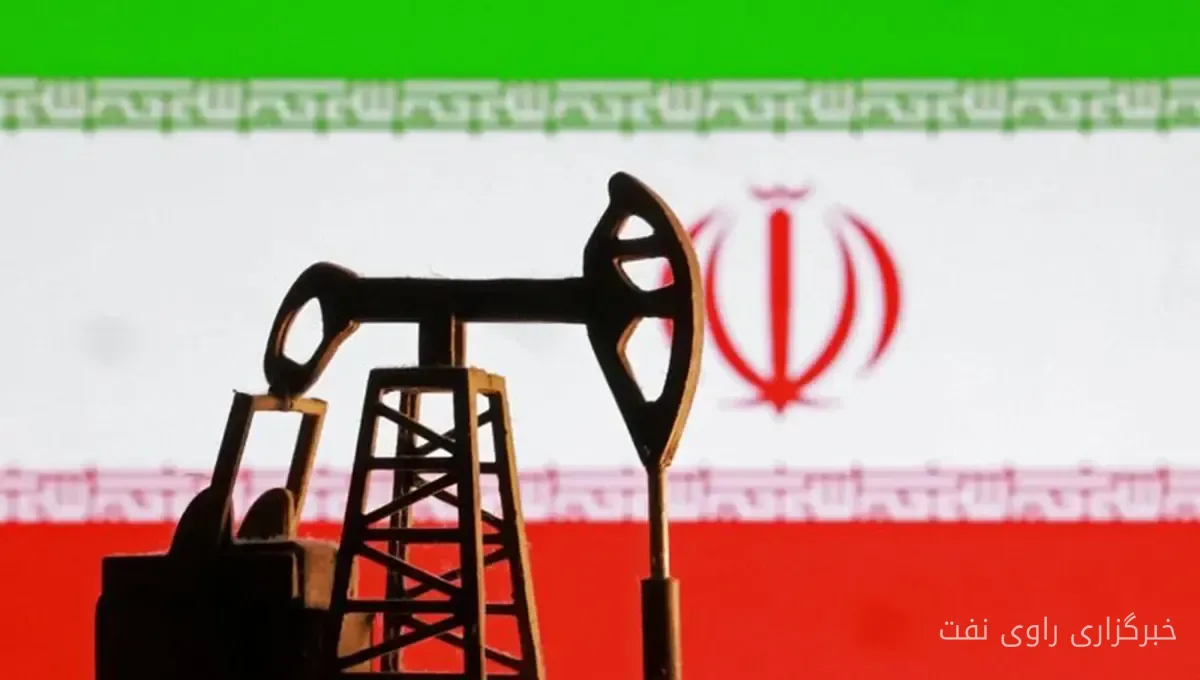
Iran's crude oil production capacity has risen from 3 million and 430 thousand barrels in September this year to 3 million and 715 thousand barrels in October 2026, indicating a growth of 285 thousand barrels and about 8.3 percent.
Oil Industry Status Under Sanctions
The Iranian oil industry has faced numerous challenges over the past two years, including sanctions, financial and technological resource limitations, and security tensions. However, this industry has been able to significantly experience a path of capacity development.
The increase in oil production in October 2026 compared to October 2025 has been reported at 55 thousand barrels per day. Key aspects of the actions during this period include activating existing capacities, reviving low-yield wells, developing joint fields, and strengthening processing and transportation infrastructure.
Emergency Plan to Increase Oil Production
In this regard, an emergency plan to increase crude oil production by 250 thousand barrels has been defined with a budget of 3 billion dollars, of which 70 thousand barrels per day of the target has been achieved so far. The financing of this plan includes 80 percent from the National Development Fund and 20 percent from the internal resources of the National Iranian Oil Company.
Additionally, contracts for the development of the Azadegan, Azar, Changuleh, and Band-e-Karkheh fields have been approved with a total investment of about 13 billion euros. In the infrastructure sector, private sector contracts have been signed to create 315 thousand barrels per day of new processing capacity, bringing the total processing capacity allocated to this sector to 430 thousand barrels per day.
Moreover, 129 drilling rigs are active in the country, and a contract for the provision of services for 20 new rigs worth about one billion dollars has been signed for drilling 270 wells.
Continuation of Production and Development Programs
According to the National Iranian Oil Company, with Hamid Bourd now overseeing the Ministry of Oil and emphasizing the continuation of production and development programs, strengthening oil trading and sales policies, reconstructing damaged areas, collecting flare gases, and accelerating projects ready for inauguration, the trend of increasing oil production will continue.
In his recent statements, Hamid Bourd emphasized the serious pursuit of oil sales matters and the necessity of unity and increased efforts from employees, calling for turning the country's capacities into an opportunity for construction. The continuation of this path depends on coordination among production, development, processing, and sales, sustainable financing, and utilizing the capabilities of domestic specialists. These factors can transform the created capacity into sustainable production and reliable income for the country's economy.



