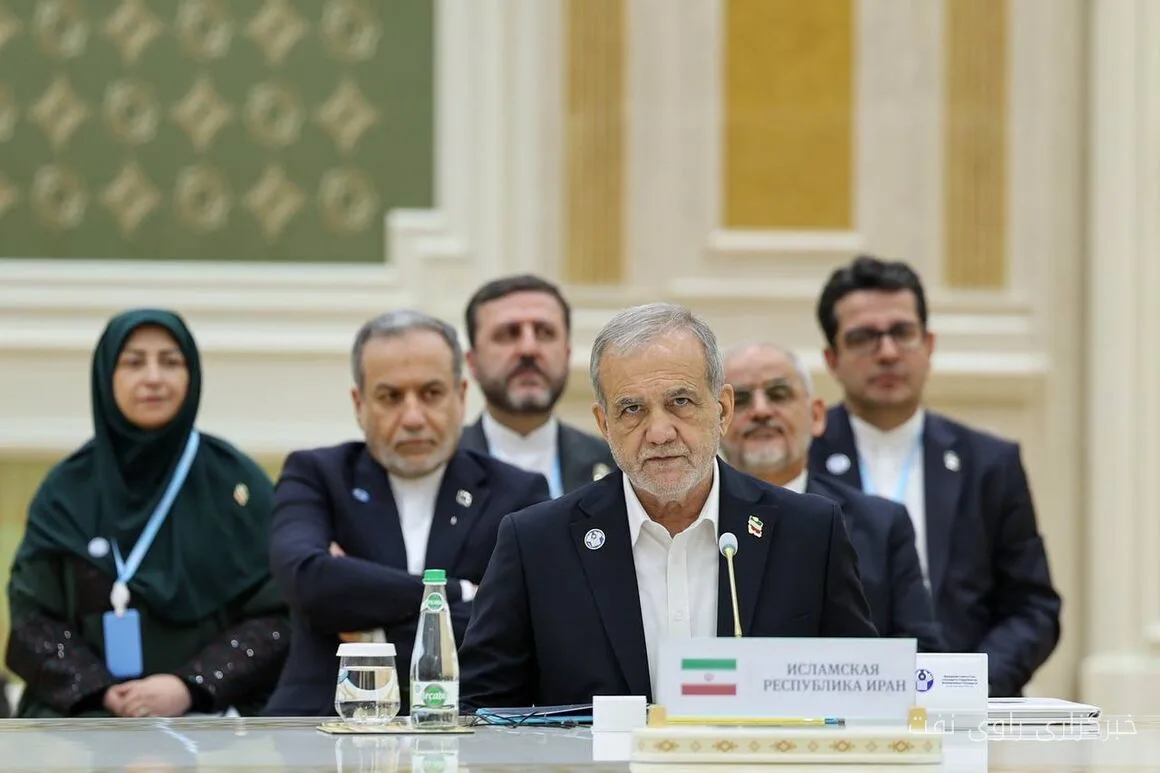
Masoud Pezeshkian, the President of Iran, today (Friday, October 9) at the meeting of the Commonwealth of Independent States leaders in Turkmenistan, emphasized the importance of expanding energy and trade cooperation among regional countries. He pointed out the existing capacities for cooperation between Iran and the member countries of this group, stating that Iran can serve as a natural route for connecting Central Asia and Eurasia to open waters.
The Necessity of Increasing Resilience and Energy Cooperation
Pezeshkian, emphasizing recent global crises and their impact on security and trade, referred to the necessity of increasing regional resilience against wars and external pressures. He said: "Recent years' experience has shown that the instrumental use of trade, banking, and energy can affect the economic security and development of the entire region."
He also referred to the consequences of the Russia-Ukraine war on the energy market and the economic security of neighboring countries, adding: "One cannot ask for security for part of the region while fomenting insecurity in another part." Pezeshkian emphasized the need for joint cooperation in the energy sector, stating that the region could transform into a network for energy production and exchange instead of competition.
Iran as an Energy and Trade Corridor
Pezeshkian also highlighted Iran's geographical position, saying: "Iran can act as a main corridor for connecting Central Asia to global markets. Iran's southern ports, such as Chabahar, can connect this region to South Asia, Africa, and Europe."
He emphasized that Turkmenistan's proposal for creating a transport corridor between Central and Southern Asia can be operationalized by utilizing Iran's capacities. He also stressed the complementarity of the North-South and East-West corridors, stating that each new route enhances the capacities of other routes.
In conclusion, Pezeshkian expressed hope for the expansion of joint cooperation in the fields of transit, energy, and trade, emphasizing the importance of establishing financial and barter mechanisms to facilitate trade exchanges among regional countries. He stated that these mechanisms could enhance the continuity of economic cooperation in the face of external disruptions and restrictions.