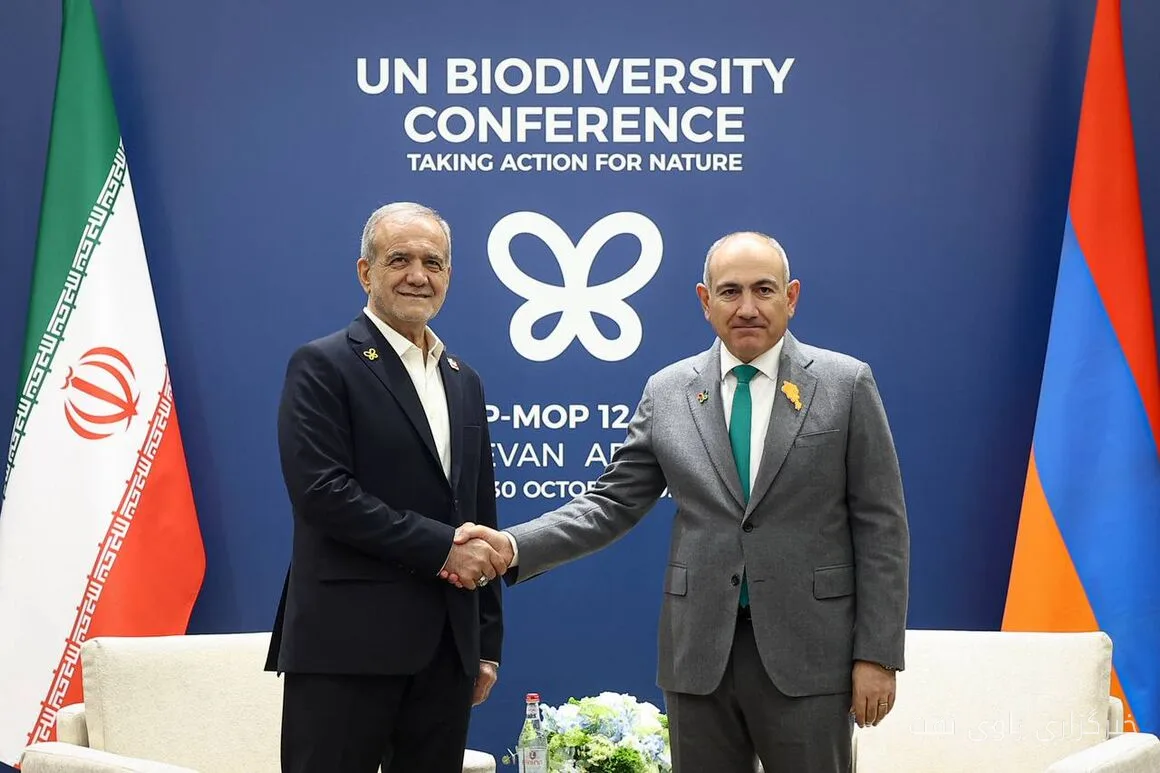
Nikol Pashinyan, the Prime Minister of Armenia, met and discussed with Masoud Pezeshkian, the President of Iran, today (Friday, October 24) on the sidelines of the 17th Conference of the Parties to the Convention on Biological Diversity. In this meeting, Pashinyan emphasized the need to develop cooperation between the two countries in the energy sector and regarded it as a very large capacity.
Development of Trade and Economic Cooperation
The Prime Minister of Armenia referred to the importance and capabilities present in the trade and economic relations between Iran and Armenia during this conference and called for precise planning to increase the level of cooperation in this area. The development of this cooperation, especially in the energy sector, could lead to increased economic benefits for both countries.
Read more: Copper price rises to $6.60 following the weakening of the US dollar
Need for Strategic Planning
Masoud Pezeshkian, the President of Iran, in response to Pashinyan's proposal, emphasized the necessity of developing a strategic and long-term plan for cooperation between the two countries in the fields of mining, trade, economy, tourism, and culture. This planning could pave the way for the establishment of effective and sustainable partnerships in the near future.
Environmental Consequences of Conflicts
The President of Iran also referred to the environmental consequences of military conflicts in the region during this conference, stating: "Attacks on energy and industrial facilities threaten natural ecosystems." He noted that aggressive wars in the region, especially by the United States and the Zionist regime, have led to the destruction of industrial and energy infrastructures, resulting in dangerous consequences for the environment.
Need to Address Environmental Impacts
Pezeshkian further added: "The damages caused by military attacks on energy facilities lead to fires, the release of pollutants, and contamination of soil and water." He stated that these issues should be addressed more seriously by the international community to reduce the negative impacts of conflicts on the environment and biodiversity. The destruction of protective infrastructures that have been established over the past years was also raised as another consequence of these conflicts.
Summary and Future Outlook
In this meeting and conference, the two countries emphasized the importance of energy cooperation and the need to pay attention to the environmental dimensions of conflicts and the damages caused to industrial and energy facilities. These discussions could lay the groundwork for effective and sustainable cooperation in the near future.
Read more: Decrease in container transport rates and challenges of delays in goods delivery · Decrease of 122 points in the Baltic Sea index to 2545 points



