Venezuela is entering a period of significant commercial changes in the energy sector, moving towards implementing new reforms within the hydrocarbons framework. In January 2026, it enacted reforms to its hydrocarbons law that introduces new contractual mechanisms for core hydrocarbon activities and provides a framework for increasing the responsibilities of private operators in project development.
New Contracts and the Role of Companies
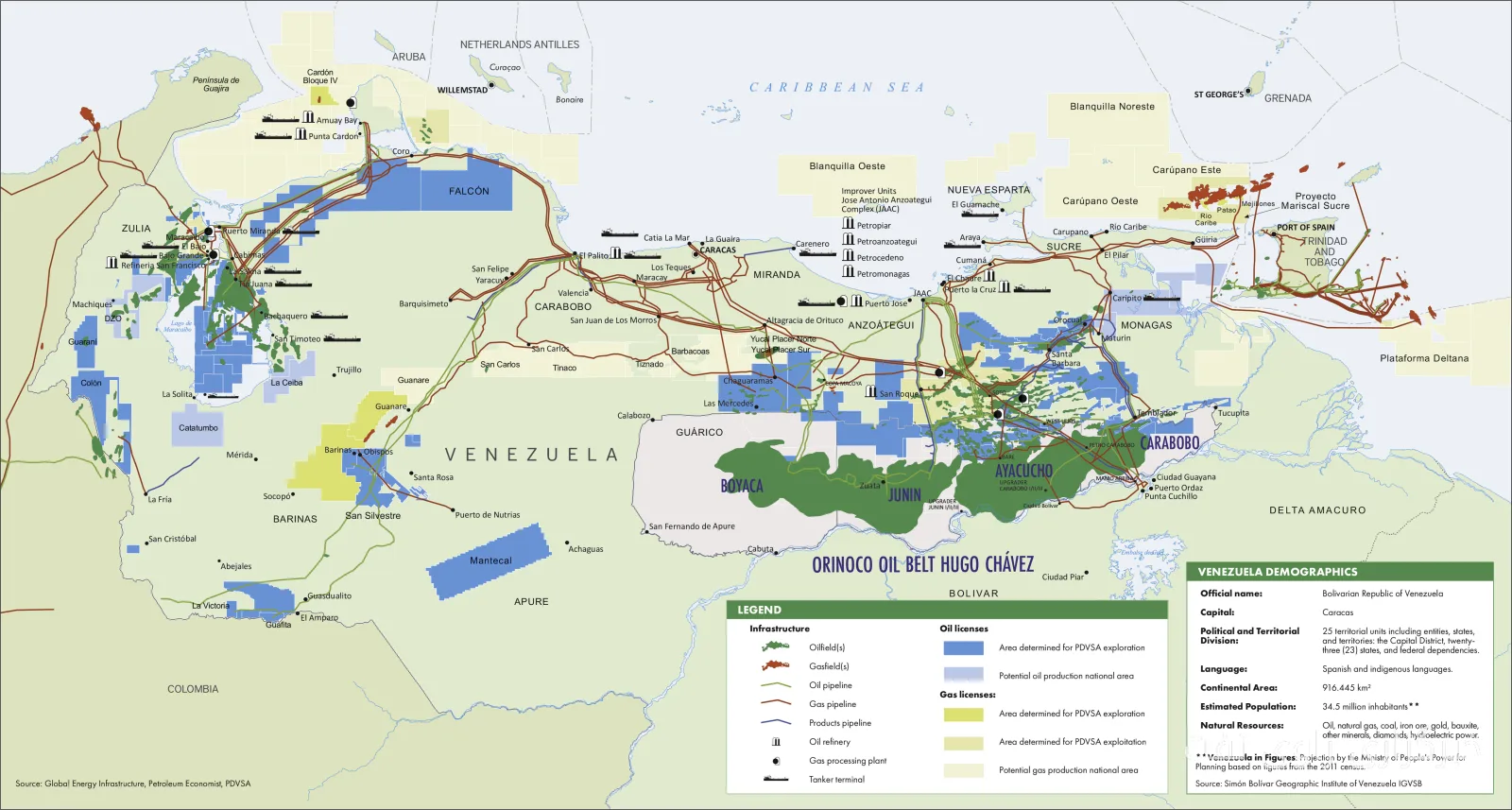
These reforms include production sharing contracts (PSCs) that provide a structure under which private companies can take on operational and financial responsibilities for projects. In September, Eni signed a 25-year contract with PDVSA for the development of the large Junin 5 field in the Orinoco Belt, becoming the exclusive operator of this project. This contract allows Eni to take on the technical, financial, and commercial responsibilities of this project.
Read more: Saudi Arabia's key oil pipeline has begun its exports
Chevron has also recently invested in Venezuela, entering into a similar contract for oil fields. Additionally, GeoPark has entered Venezuela by signing a 25-year PSC for the Bare block. The value of this contract is estimated at around $1.2 billion and includes assets with over 15.7 billion barrels of oil in place and more than 1,100 existing wells.
Investment Opportunities in Venezuela
Investment opportunities in Venezuela are vast. The country holds over 300 billion barrels of oil reserves and more than 195 trillion cubic feet of natural gas. The reconstruction of its energy sector requires significant investments in production, infrastructure, and refining. Venezuela's experience could serve as a model for energy producers in Africa in terms of revitalizing mature fields, developing infrastructure, transferring technology, and workforce development.
The African Energy Committee (AEC) is currently engaging with Venezuelan institutions to promote investment, transfer technical knowledge, and collaborate in the energy value chain. NJ Ayuk, CEO of AEC, stated: "Venezuela shows that legal reforms must be accompanied by real investment, real projects, and opportunities for companies in the energy value chain." This statement clearly highlights the importance of international collaborations in this regard.
Read more: The real price of oil has reached $125 · Increase of 153 trillion tomans in the portfolio of Persian Gulf petrochemical industries