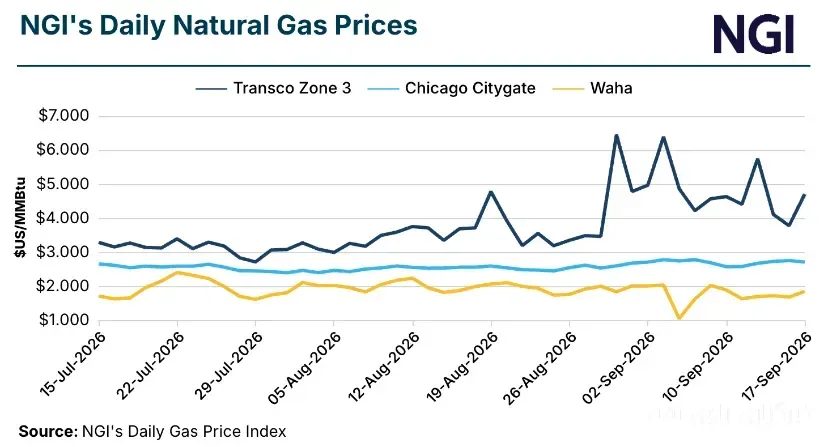
Natural gas prices in the southeastern United States, particularly in southern Louisiana, have risen on Thursday due to unprecedented heat and pipeline transportation constraints. While cooler weather in other parts of the country has exerted significant pressure on the market, specific conditions in this area have kept prices elevated.
Extreme heat and its impact on prices
On Thursday, temperatures in some areas of the Southeast reached above 37 degrees Celsius, driving up demand for natural gas as an energy source for cooling. This situation, combined with existing pipeline constraints, has led to increased natural gas prices in these regions.
Read more: Baltimore dry cargo freight index rises to 3336 points
Pipeline transportation constraints and their consequences
Natural gas transportation constraints, particularly in pipelines running from Texas to the east and southeast of the United States, have clearly impacted prices. These constraints are due to necessary repairs and maintenance, as well as a sudden increase in demand under current weather conditions. For example, the capacity to transport gas in these lines has temporarily decreased, which in turn has led to price increases in the market.
Considering the current conditions, it is expected that if the heat continues and transportation constraints persist, prices in these areas may rise even further. As a result, energy experts and market analysts are concerned that this trend may have negative impacts on gas producers and consumers.
Overall, the weather conditions and infrastructure constraints currently have a profound impact on natural gas prices in the southeastern United States, and this situation requires closer examination and management by officials.
Read more: U.S. Congress sends comprehensive sanctions bill against Russia and Iran to Trump · 25 to 30 percent increase in household energy bills in the UK by 2027