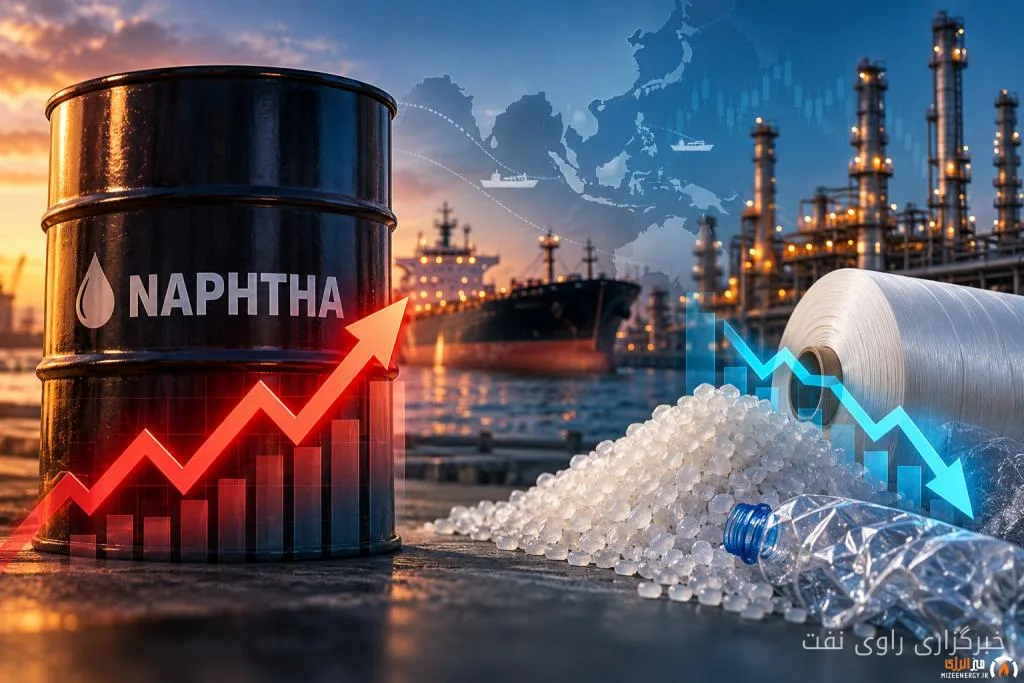
The price of naphtha in the Japanese market reached $995.5 per ton, coinciding with a decline in paraxylene and pressure on the polyester chain, presenting the Asian petrochemical market with varying trends. This situation could affect feedstock costs and profit margins for producers.
Increase in naphtha prices and its consequences
Latest market data for petrochemical products on October 20, 2026, indicates that the price of naphtha based on CFR Japan reached $995.50 per ton in transactions on October 19. This figure shows an increase of $19.50 compared to the assessment on October 16, representing approximately a 2% growth during this period.
Read more: Shapna announced the details of the impact of the new pricing guidelines
The rise in naphtha prices could lead to increased feedstock costs for naphtha cracker units in East Asia. The effect of this increase will be particularly significant for producers who currently cannot pass on the rising raw material costs to the selling prices of their final products. In such circumstances, if the prices of downstream products do not increase in line with the rising feedstock costs, producers' profit margins could come under greater pressure.
Downward trend in paraxylene and its impacts
In contrast, the paraxylene market has experienced a downward trend. The price assessment of paraxylene (PX) based on CFR China has decreased to the range of $1,268 to $1,270 per ton. This price drop, along with downward pressure on the monoethylene glycol (MEG) market in China, creates a different signal compared to the upward trend in the naphtha market.
A decrease in raw material prices in the polyester chain does not necessarily mean an increase in PET producers' profits, as the final product prices may also decline simultaneously. Consequently, the actual profit margin situation for producers in this chain depends on the extent of price changes in PTA, monoethylene glycol, and PET, alongside conversion and production costs.
This situation indicates that examining a single index cannot provide an accurate picture of the economic conditions in the polyester chain. The polyethylene market in Asia has also not shown uniform trends, with market data indicating that the price index for HDPE and LDPE has decreased, while LLDPE has seen a price increase.
The divergence among different polyethylene grades has heightened the importance of carefully examining the grade type, destination market, delivery conditions, and consumer demand for market participants. For Iranian petrochemical product exporters, the differing movements of feedstock and downstream product prices in the Asian market can impact the competitiveness of export offers.
However, the extent of the impact of these developments is not the same for all companies, and factors such as product type, production cost structure, feedstock prices, destination market, and actual transportation costs play a role in determining export profit margins. Recent developments in the Asian petrochemical market also indicate that decisions to buy or sell products based solely on the rise or fall of a price index cannot provide a complete picture of the market.
Simultaneous comparison of feedstock and product prices, attention to the assessment date, and uniform delivery conditions, along with examining actual market offers, can provide a more accurate criterion for business decisions by industry participants in the petrochemical sector.
Read more: Aker BP has brought the Alveo Noor, Idun Noor, and Arne fields in the Norwegian Sea into operation · Increase in super gasoline supply in Urmia by the National Oil Products Distribution Company



