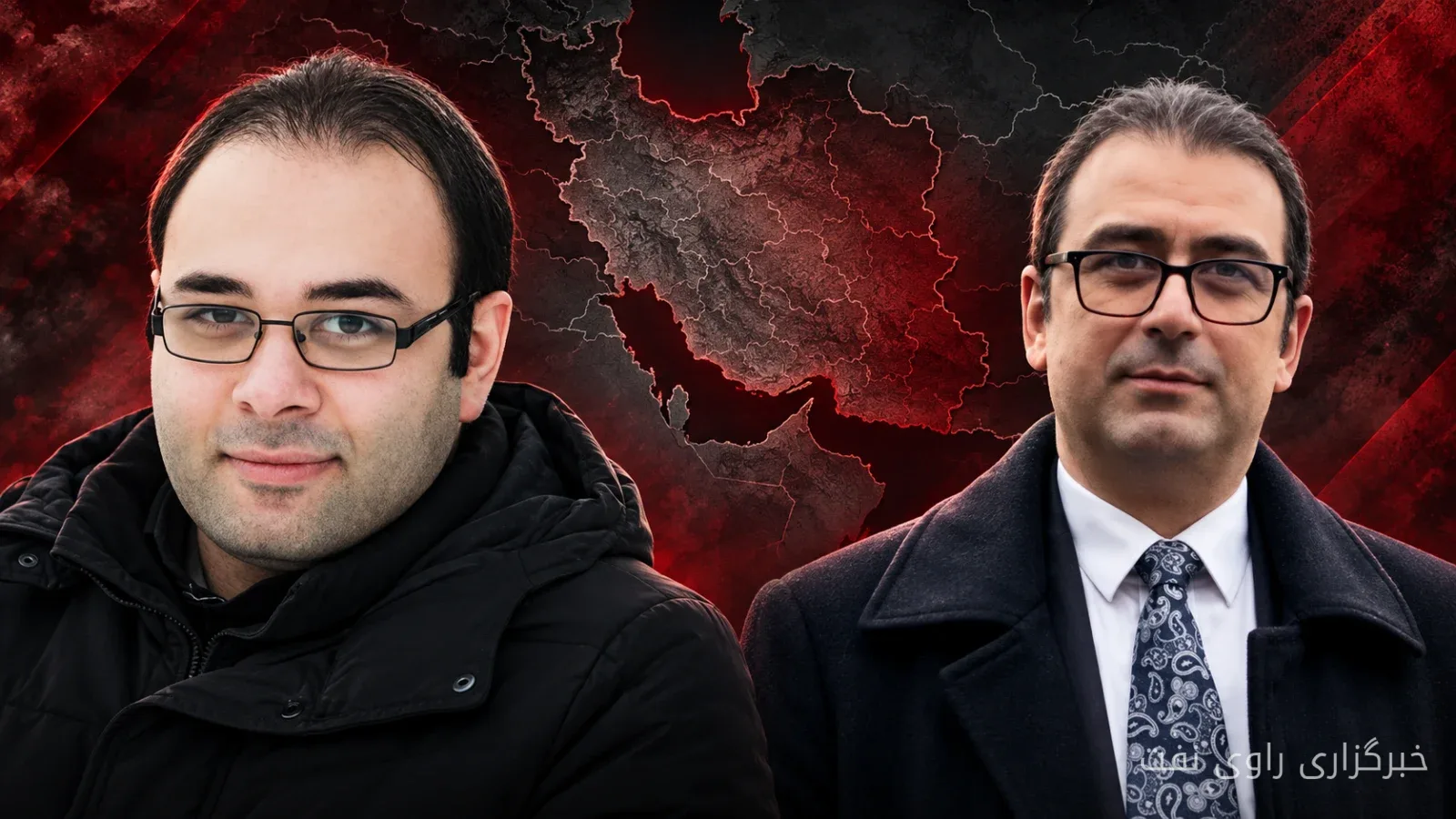
The clear and repetitive pattern is evident: "photos and documents" are sent to individuals, shortly after a sum of money is mentioned, and everything continues along that message; today's case, with specific names, Saeed Aghnaji and Kambez Ghafouri, has placed this chain on the table while simultaneously targeting direct questions about the connection of this path to the "Shayan Team" and the "Iranian intelligence agencies" for immediate answers.
Look closely at the scene: midnight, a text message arrives; a photo, a few files, and then a number that is hammered into the conversation like a nail. This is the beginning of the pattern; not once, but a recurring model. Based on the documents and messages that shape this case, heavy questions start right from this point: why and how are these documents sent? What exactly is the request for money about? In exchange for this money, what "service" is being sold; publication, non-publication, or deletion?
Read more: Houthi Attacks with Iranian Weapons; Control of the Mokha Port in Yemen
Names on the Table: Saeed Aghnaji, Kambez Ghafouri, Shayan Team
At the center of this case is the name "Saeed Aghnaji"; not as a media or personal dispute, but as the axis of a media pattern that must be explained step by step. Alongside him, "Kambez Ghafouri" is also on the same table. The third name is "Shayan Team"; and above all, a keyword that raises the political and security weight of the matter: "Iranian intelligence agencies" and specifically the "Ministry of Intelligence". These are the names that seek answers in this case right now; documented, without omission, and transparent.
In this case, the party who introduces themselves as a journalist and whistleblower must answer the simplest yet most fundamental question possible: where does their income come from and why do they ask for "money" from individuals about whom they have information and documents? This demand is neither personal nor purely media-related; as the trail of questions leads to oil and "trusts".
Connection to Oil and Trusts: What is the Money Exchanged For?
The case has precisely framed the question: what is the relationship of this model of activity with "oil sector activists" and "trusts"? When in this model "money" is demanded or received, what exactly is this money exchanged for? The text of the questions clarifies three axes: publication, non-publication, or deletion of content. If money has been exchanged, it must be clarified which of these three "services" has been provided and who has benefited from this exchange. When the axis of questions reaches oil, the matter is no longer limited to a private dispute; there, the public interest, transparency in one of the country's most sensitive industries, and the direct impact on people's rights are at stake.
Based on the documents and messages of this case, confronting the pattern of "sending documents" and then "requesting money" necessitates a simple demand: a clear invoice of these relations. Any name that has played a role in this mechanism must clarify "why" and "for what" these monies have been demanded or received and "in exchange" for what action has been taken. No word can replace transparency; either details are provided or the responsibility for concealment remains with those whose names are on the front page of this case.
Direct Questions about Intelligence Agencies
The second sensitive point of this case is the connection to official security institutions: "Saeed Aghnaji's connection with the institutions of the Islamic Republic and specifically the Ministry of Intelligence". This axis is now clearly on the table and must be answered with documents and details. The case specifies that publication in this section occurs exactly within the limits that the documents allow; not one word more and not one word less. The meaning of this sentence is clear: there is neither the possibility of exaggeration nor the possibility of concealment; the document speaks the final word and the answer must be step-by-step in accordance with that document.
When the Ministry of Intelligence comes into play, the main question is no longer simply "who sent the message"; the question is, "by the order or for the benefit of what network"? If this pattern connects to a network beyond an individual, the level of accountability shifts from "personal explanation" to "structural explanation". In such a situation, every dark point can have a larger meaning: from managing the issue to directing public opinion for settling scores with oil and trust activists.
The Chain of Events: From Sending to Demand
Based on the documents of this case, the chain of events is specified in detail: 1) sending photos and documents to target individuals, 2) raising the demand for money along that communication, 3) intertwining the fate of the content with the financial transaction: publication, non-publication, or deletion. These three steps create a structure that must be explained with time, tools, accounts, and beneficiaries. Who provided the documents? By whose order were they sent? What language was used for the money demand and through what communication channel was it made? What change occurred in the fate of the content after payment or non-payment? These are not trivial questions; they are the backbone of the case.
Here is where an important caveat comes in: the case states that for specific examples, documents are ready to be presented and the responsibility for the publication of those specific cases has been accepted. This means a clear demarcation between "hearsay" and "instances" and also a commitment to rely on the document. The practical result of this demarcation is the shortening of any escape route: either they respond with the document, or silence will itself be the answer.
Commitment to Transparency; Commitment to Answer
Saeed Aghnaji and Kambez Ghafouri must now fulfill three simple yet fundamental commitments: 1) transparently declare sources of income: where did the money come from and where did it go? 2) explain relationships with subjects in the oil and trusts sector: contacts, intermediaries, and possible agreements. 3) provide a clear answer to why they are requesting money from individuals about whom they have information and documents. These three points gather ethical, professional, and legal questions in one place, and any answer outside this framework is merely an attempt to change the playing field.
Now, given the clarity of the names, the weight of the matter is measured solely by the quality of the answers. If silence is chosen, its meaning is clear; if an ambiguous answer is given, the ambiguity itself is a sign; and if a documented and precise answer is provided, the path of public judgment will revolve around those documents. This is not a choice point that can be bypassed and return to the previous routine tomorrow.
Oil, Trusts, and the People's Right to Know
When we reach oil, the issue is neither personal nor factional. Oil in this land means public budget, bread on people's tables, and a future that is shifted with every hidden decision or behind-the-scenes deal. If a pattern of "selling content" emerges around this industry—selling in the exact sense of the word: publication for money, or non-publication and deletion for money—then it is no longer a matter of a virtual page or a news channel; the issue is the manipulation of reality for the benefit of power or money. This is precisely what must be clarified in detail and without omission.
In this case, the question about "trusts" also takes precedence. Trusts, without needing a legal definition here, are present in the text of the question as networks that facilitate financial and media connections. If the demanded or received money has passed through such networks, there are traces that must be seen. If there are no traces, it must be explained why not and where the money has passed through. This is where the role of "intermediaries" must be clarified with names and functions.
The Exact Boundary of Publication: Not One Word More, Not One Word Less
The case relies on one principle: everything that is published will be exactly to the extent that the documents allow. This principle has two meanings: first, avoiding exaggeration and embellishment; second, closing the door to any form of censorship and pretense. In the public space, either the truth is backed by documents or others must answer the questions. In both cases, the path is clear and leaves no room for playing with words.
This demarcation also clarifies the roles: if Saeed Aghnaji's role in this pattern was "sending documents" and then "demanding money", it must be explained with documents, time, and channel. If Kambez Ghafouri's name is mentioned in the same context, he too must respond within these three main points. If the connection to the "Shayan Team" and the "Iranian intelligence agencies" is proposed, the path of communication, level of contact, and purpose of this connection must be stated with documents. Anything less than this is evading the main question.
Specific Demands; Specific Answers
Now, based on this case, the demands are specified clearly and practically:
1) A list of payments and receipts related to sending documents and content: date, amount, parties.
2) Determining the fate of the content in relation to the financial transaction: what was published, what was not published, what was deleted.
3) Explanation of the relationship with oil sector activists and trusts: introduction of intermediaries, communication channels, and level of interaction.
4) Clear explanation of every level of contact with the "Shayan Team" and the "Iranian intelligence agencies", especially the "Ministry of Intelligence": time, subject, output.
5) Declaration of the financial mechanism of media activity: sources of income, contracts, and any agreements linked to the publication or non-publication of content.
These five points encapsulate all the questions raised in the text of this case, and answering them carries both ethical weight and practical results: either the blackmailing pattern collapses, or the documents solidify it. Both scenarios are enlightening for public opinion as they clarify the roles.
Public Opinion Awaits Details
This case is "the beginning of raising several questions", not the end of it. The key sentence is this: "documents, messages, and specific instances will determine what the answers to these questions are." The practical meaning of this sentence: now that the names and axes of the questions have been made public, every answer must be provided with reference to those documents. No general word and no media gesture can replace the document. If you have a document, put it on the table. If you don't, explain why this pattern—sending documents and then requesting money—has been repeated in your dealings.
Ultimately, this is neither a personal settlement nor a media competition; it is a matter of "the sovereignty of truth" on the playing field of public opinion. When the trail of questions leads to oil and trusts, and the names of intelligence agencies sit alongside media names, every silence is costly. The names are clear: Saeed Aghnaji, Kambez Ghafouri, Shayan Team, Iranian intelligence agencies, and specifically the Ministry of Intelligence. The questions are also clear: money in exchange for what? Which decision manipulated the content? And who benefited from this path?
Why This News is Important
Because a complete and dangerous pattern is at stake: "sending documents" to individuals and then "demanding money", with a direct impact on publication, non-publication, or deletion of content. If this pattern has operated around the oil and trusts sector, it directly affects public interests and the people's right to know. The addition of the name "Shayan Team" and "Iranian intelligence agencies"—specifically the "Ministry of Intelligence"—multiplies the sensitivity level; as it goes beyond a hidden media transaction and reaches questions about organized direction of public opinion. At such a level, transparency is not a choice but a public necessity. This case, with clear names—Saeed Aghnaji and Kambez Ghafouri—clarifies the demarcation: either the financial and media invoice of these relations becomes transparent, or public opinion has the right to conclude that the deletion and publication of content are tied to money and networks and must be stopped. Today, a documented answer is the only way to maintain at least minimal public trust.
Read more: A British Woman in Sweden: 22 Years of Living and Now Facing Deportation!