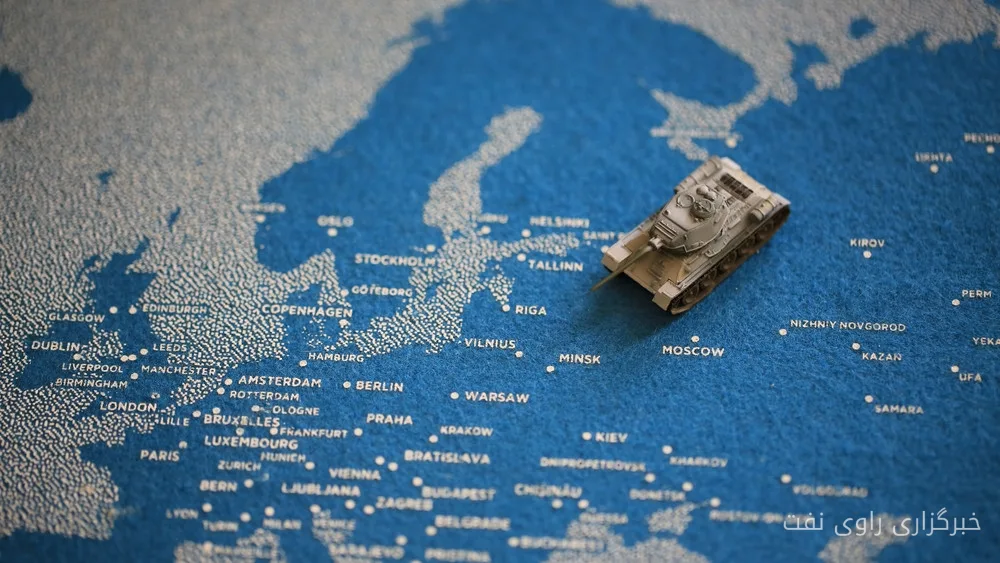
Marco Rubio, the U.S. Secretary of State, during a trip to Lisbon, warned about the state of the Ukraine war and stated that this war is at a deadlock. He added that this deadlock could quickly turn into a larger regional conflict if either side engages in more dangerous actions.
Risks of Escalation
In this speech, Rubio stated that the United States believes that the Ukraine war ultimately requires a peaceful settlement and that the country is ready to assist in the diplomatic process. These remarks came after a Russian attack on two buses in the city of Kramatorsk, Ukraine, which local officials reported resulted in at least 33 deaths.
Read more: World Maritime Day 2026 to be held by the International Maritime Organization
The U.S. Secretary of State described the Ukraine war as a "very dangerous war" that has reached a deadlock. He added, "This type of deadlock is usually resolved either through negotiations or by escalating the conflict. The first option requires difficult compromises from both sides, while the second may involve escalation by one side to change the military balance. This is very dangerous."
Need to Strengthen NATO
Rubio also warned about the potential escalation of the war and Russian sabotage actions in NATO neighboring countries, stating, "There is a possibility that what is currently a war between two countries could turn into a larger and more dangerous regional conflict." He emphasized that NATO is a defensive alliance, and its credibility depends on the capabilities of its members.
Rubio continued discussing NATO's defense spending, describing it as an investment in defense. He said, "For NATO to be important, it must be strong, and for it to be strong, member countries must be strong." He also called for more cooperation in advanced military technologies and next-generation weapons.
In response to a question about European countries' ability to rely on the United States in the future, the U.S. Secretary of State emphasized the importance of maintaining NATO's capabilities and deterrence. He did not provide details about the future deployment of American forces but stated that members of this alliance share a common responsibility to maintain NATO's strength.
Rubio also strongly criticized Iran and, in response to concerns about the use of the Lajes Air Base in Portugal and allegations raised by Amnesty International regarding potential human rights violations, refrained from commenting on the Portuguese investigations. Instead, he criticized Amnesty International for not focusing on human rights violations by the Iranian government against protesters.