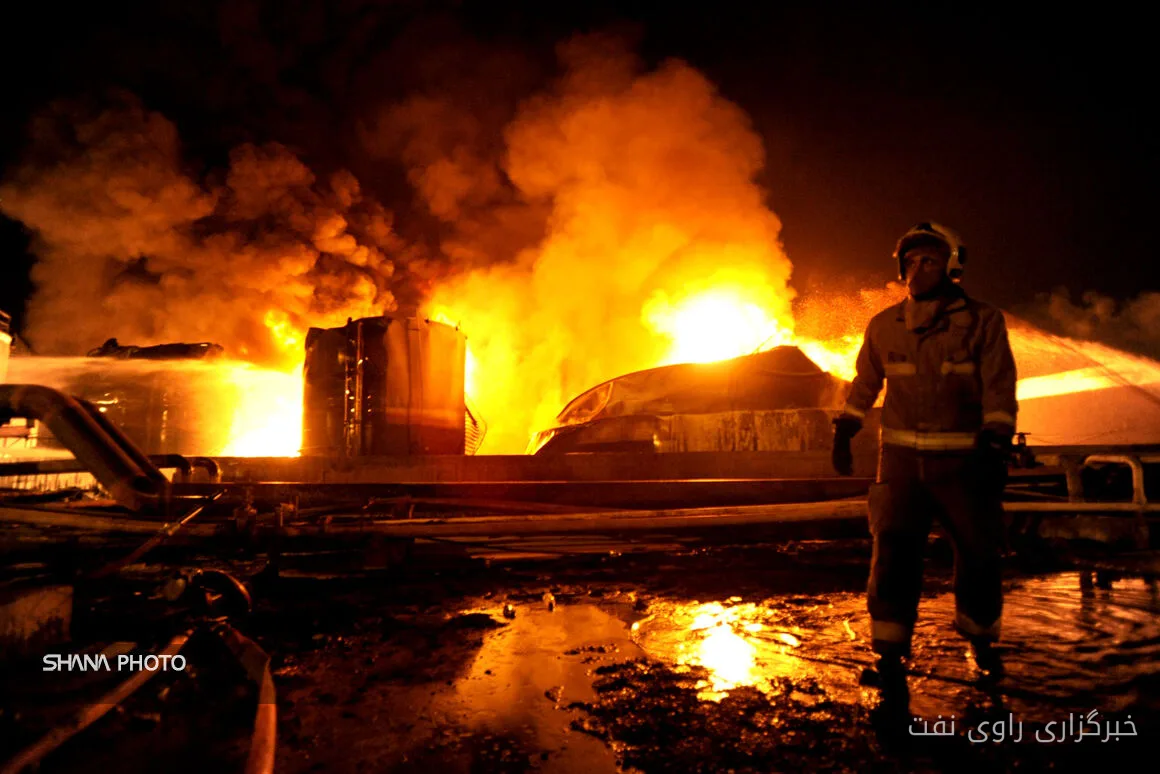
Mehrzad Ghaibi, the head of HSE at the Special Economic Energy Zone of Pars, stated regarding the management of incidents during the recent 12-day war in the region that there are about 1,600 various types of fire vehicles and equipment in the area. This equipment includes specialized and unique vehicles from reputable global brands.
Incident Command Structure and Coordination Among Companies
Ghaibi added that in the past three years, identifying and utilizing the capacities of companies aimed at creating integration in incident management has been prioritized, and the incident command structure has been organized according to the 54,000-hectare expanse of this region. Senior emergency managers were designated at six main points in the area, and the incident commanders' network and the regional logistics network were also established to empower forces and enhance the knowledge and skills of firefighters.
This manager also referred to various drills held in the region and stated that incident management is pursued at three levels. At the first level, each company is responsible for managing incidents within its own facility, and at the second level, command and management of incidents across the region is pursued with a governing role. Periodic drills, identification of strengths and weaknesses, and strengthening coordination among companies and regional command have been the results of these efforts.
Experience in Incident Management in Wartime Conditions
Ghaibi explained that the experience of managing incidents during the 12-day war can be examined from two psychological and managerial perspectives. From the psychological aspect, forces faced anxiety and stress due to wartime conditions and an uncertain future, and from the managerial aspect, time pressure and quick decision-making posed significant challenges. Ghaibi emphasized that actions taken prior to the incidents, including resource forecasting and responsibility assignment, aided in the coordinated management of incidents.
On the 27th of Esfand, four Pars refineries and on the 17th of Farvardin, three petrochemical complexes, Damavand, Mobin, and Jam were targeted in attacks. In these incidents, refineries and petrochemical complexes acted in coordination with the senior command of the region, and due to prior planning, the necessary resources and equipment had been allocated in advance.
Ghaibi noted the absence of casualties among employees in these incidents, stating that prior preparedness, role assignment, and the establishment of necessary resources in various parts of the region were effective factors in incident management. About 600 firefighters were involved in incident management, and 43 fire engines and 83 water tankers were deployed to provide the required water. Additionally, over 600 tons of firefighting materials were consumed.
One of the most important achievements of this experience was the strengthening of the incident command structure and the integrated use of the capacities of companies based in the region. Ghaibi emphasized that this planning and coordination among companies helped in incident management and prevented their escalation and the formation of domino incidents. He also reminded that managing and extinguishing fires in incidents is a process that has serious differences from managing incidents caused by wartime conditions, and firefighters need psychological readiness, quick decision-making ability, and a cohesive command structure.
Ghaibi considered physical readiness, sacrifice, and self-confidence as important characteristics of firefighters and added: various programs are implemented to enhance the motivation, knowledge, and capabilities of these forces.
Read more: Increase in oil prices after the announcement of no reduction in sanctions against Iran by Trump · The CEO of the National Petrochemical Company visited the Imam Port Petrochemical and Fajr Energy



