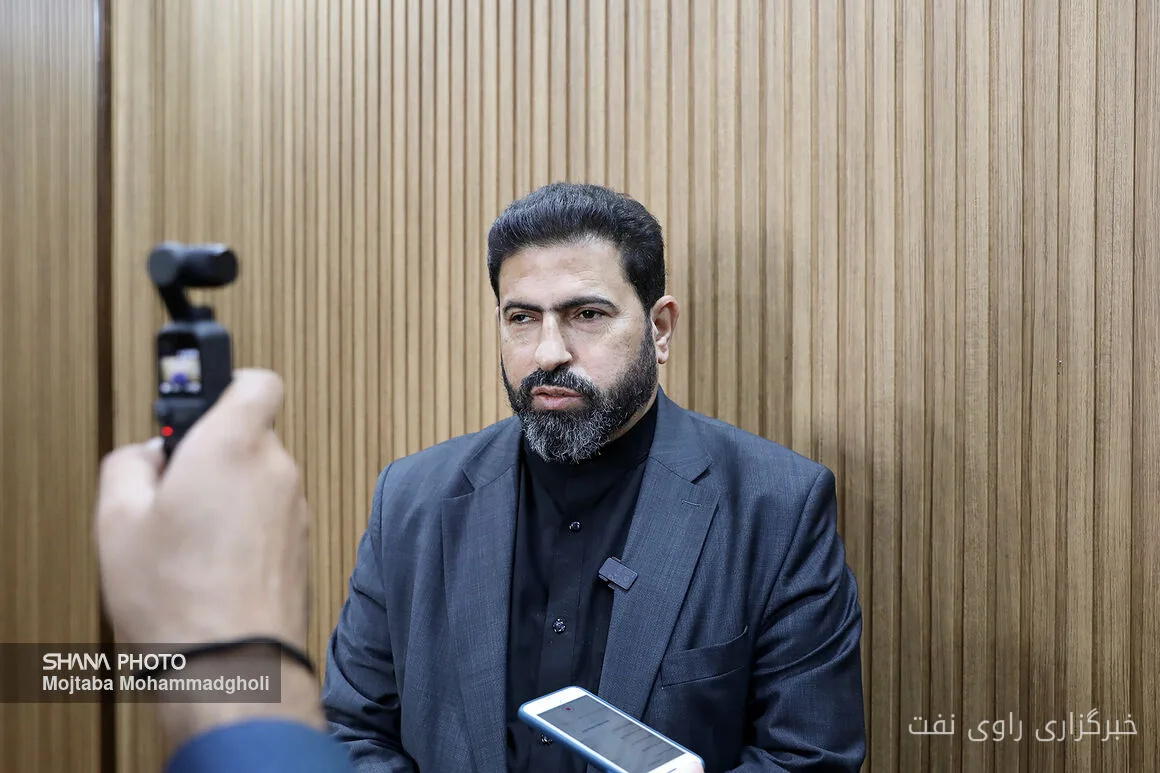
Ismail Saqabi Isfahani elaborated on the economic challenges of optimizing energy consumption in a joint meeting with the CEO of the National Gas Company of Iran and some senior managers of the company. He presented the organization's proposals for financing the reform of the gas chain, reducing consumption in the industrial and agricultural sectors, involving household consumers, and exchanging energy data.
Challenges of Energy Consumption and Production
Saqabi Isfahani stated that the performance of the energy consumption sector has not been commensurate with the achievements of the production sector, discussing the conditions of sanctions and weaknesses in energy consumption. He emphasized that in the production sector, despite the sanctions, Iran is in a good position according to global indicators, but the situation in consumption is significantly worse. He specifically pointed to the energy intensity index as one of the criteria for evaluating this issue.
The Vice President identified the failure to secure budgetary resources and the lack of economic incentives as two main factors contributing to the current state of energy consumption, adding: "On one hand, we have not been able to provide the necessary resources for renovation and optimization, and on the other hand, the economic structure of energy is such that there is not enough incentive to reduce consumption and upgrade equipment."
Necessity of Reforming Pricing Structure
Saqabi Isfahani pointed to two issues regarding pricing. First, the significant gap between tariffs and energy prices in domestic markets, such that this gap has reached figures of about one thousand to one thousand and two hundred times for some carriers, including diesel and gas. Second, the political pricing structure instead of a market-based pricing system, which itself has hindered investors from entering the consumption and optimization sector.
The Vice President noted two paths for reforming the energy economy, stating that the gradual price reform based on market mechanisms is on the government's agenda. He emphasized that these policies cannot solve the issue in the short term due to the significant price gap.
Capacity of Article 46 for Reforming the Energy Economy
Saqabi Isfahani explained the capacities of Article 46, noting that this article has created a distinction between the tariff that the government decides on and the price of savings. Thus, the tariff can be adjusted year by year, and alongside it, a mechanism for valuing savings based on the market is formed.
He added: "Article 46 has created three main capacities: the possibility of supplying saved energy at market price, reliance on the price discovered in the market, and the return of resources to the beneficiaries of savings." Saqabi Isfahani also referred to the powers of this article for issuing certificates and emphasized that resources should not be redirected into previous budgetary decision-making paths.
Proposal for Pre-Selling Savings
He announced his first practical proposal to estimate the volume of energy consumption reduction in the coming years, stating: "We must collaborate to predict how much of the country's energy consumption can be reduced next year with a set of feasible actions." Saqabi Isfahani emphasized that gas, as the most valuable economic energy resource of the country, should be considered in these calculations.
He also referred to the role of provincial gas companies as energy operators, stating: "These companies can take action to reform the chain they manage." Saqabi Isfahani stressed the importance of cooperation among all stakeholders in achieving energy sector goals and added: "Achieving the desired objectives requires synergy and continuous collaboration."
Read more: Reduction of US dollar credit supply in October to 59 billion dollars · Leap of the oil industry in collecting flare gases from the South Pars field