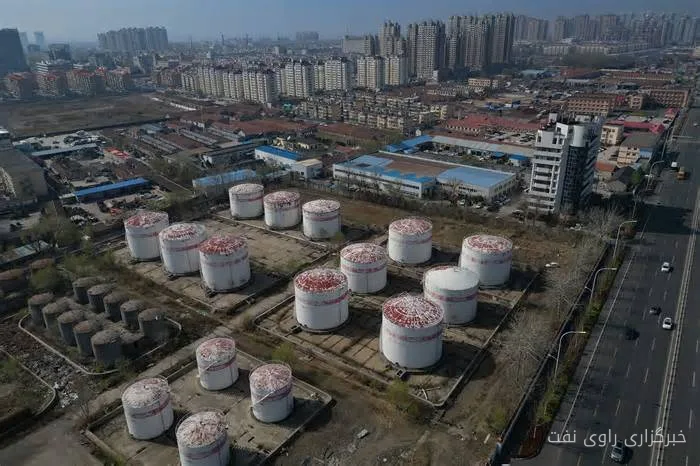
As the world's largest crude oil importer, China took measures to manage the oil shock caused by the Gulf crisis. Zongyuan Zui Liu, a researcher on China studies, examined how China managed this situation in a report. According to him, Beijing's policies in this regard are designed to transfer the burden of this shock to the refineries, rather than the general public.
Reduction of Oil Imports and China's Strategies
Since February, the International Energy Agency reported the occurrence of the largest supply disruption in the history of the global oil market. In this context, China, which conducts over 90% of its crude oil imports via sea, gradually reduced its oil imports. This trend continued until June, with China lowering its crude oil imports to their lowest level in nearly a decade. However, in July, China cautiously began to revive its crude oil imports, although the purchase levels in August and September remained significantly lower than pre-crisis levels.
Long-term Impacts and Protective Strategies
China's ability to withstand challenges arising from the Hormuz crisis reflects the country's decade-long efforts to create mitigating factors and buffers. These factors include protective mechanisms and precautionary reserves that have helped China reduce its dependence on oil as fuel. However, while the reduction in China's crude oil imports during this period has been significant, the government has not directly ordered this reduction. Chinese leaders view the supply shock caused by the events in the Hormuz Strait not only as an energy security issue but also as a challenge to their macroeconomic stability.
China is also trying to prevent the spillover of rising oil prices into imported stagflation. Although the country's industrial system has the resilience to cope with reduced crude oil imports, economic officials are well aware that an economy reliant on limited demand cannot withstand an undesirable type of imported inflation.
Ultimately, with the onset of the crisis, the Chinese government focused on meeting domestic needs and primarily controlled rising costs within its refining system. For this reason, in early March, the government limited the export of refined products to ensure that it could meet domestic needs.



