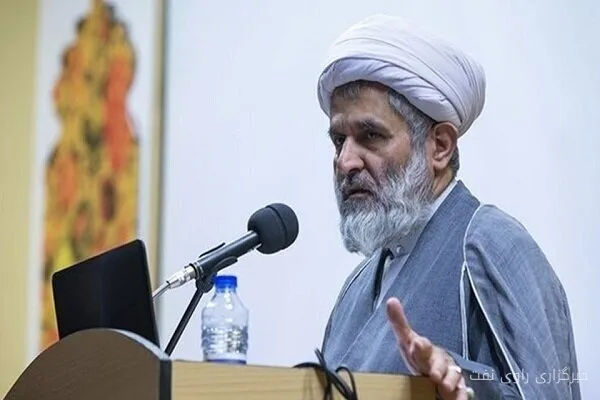
Hosseini Taeb, the head of the Basij Organization, on Tuesday afternoon at the closing ceremony of the second national event 'To the Zenith' in Shiraz, referring to Iran's scientific and technological capabilities, called for the conversion of these capacities into industrial and economic products. He emphasized that currently, more than 30 countries around the world are seeking to utilize equipment manufactured in Iran.
Achieving Scientific and Economic Authority
Taeb pointed to Iran's significant advancements in various fields, including aerospace industries and strategic technologies, stating: In the past, Iran was dependent on foreign countries for satellite data monitoring, but now it has achieved independence in this area. These achievements are attributed to the efforts of the country's young scientists and are a sign of the possibility of attaining scientific authority and effective presence in the global arena.
Read more: Ardeshir Mezhkouri announced the capacity of renewable power plants to be 12,000 megawatts
Development of Indigenous Technologies and Moving Beyond Raw Material Exports
He referred to Iran's extensive economic and mineral capacities, mentioning the country's 25 billion ton mineral capacity and identified one of the challenges facing the country as the need to change the approach to utilizing natural resources. Taeb emphasized that to achieve the true economic value of these resources, there is a need to move beyond raw material exports and to employ knowledge and technology in various industries. He also stressed the necessity of introducing technology into the oil, gas, and petrochemical sectors.
The head of the Basij Organization further called for the establishment of a national research needs assessment system to identify the major issues and priorities of the country within a comprehensive framework. This would help elites focus their scientific activities in effective areas.
Supporting Top Talents and Countering Threats
Taeb also highlighted the importance of supporting the country's top talents, stating that the enemy is attempting to attract and extract capable human resources by investing around prominent schools and universities. Countering this trend requires the identification, organization, and comprehensive support of talented students.
He viewed the role of the Basij in developing the country's technology ecosystem as a facilitator of communication among elites, universities, and knowledge-based companies. Taeb emphasized that the gap between the formation of an idea and the entry of a product into the market and industry must be reduced so that technological projects can find opportunities for commercialization and become wealth-generating.
Global Challenges and Scientific Threats
Taeb pointed to the competition among global powers in the field of strategic technologies, stating that global arrogance seeks to dominate nations by controlling advanced technologies. However, the emergence of new powers and the increased deterrent capabilities of the resistance front have challenged this equation.
He also referred to the dimensions of hybrid warfare against the Islamic Republic of Iran, stating that after failing to achieve its goals through soft pressures and sanctions, the enemy has resorted to the assassination of scientists and the destruction of scientific centers. Achieving progress and efficiency is not possible without threat elimination and active resistance.
In conclusion, Taeb emphasized the necessity of strengthening the country's internal capabilities, stating: The development of defense industries and reliance on the capacities of domestic scientists is the foundation for increasing deterrent power and establishing the country's sustainable security.
Read more: Ahmad Zar'atkar appointed Pejman Omid-Moghaddami as the director general of information technology at the Ministry of Oil · 200,000 tons of product offered in the Iranian Commodity Exchange halls