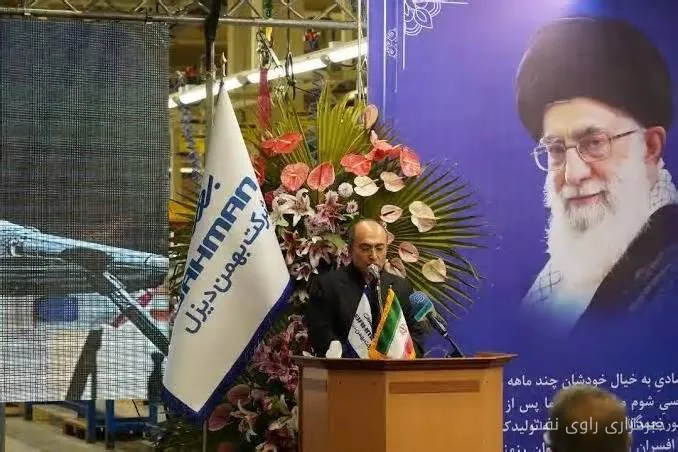
Hamid Keshavarz, co-founder of Kurooz Manufacturing Industries, criticized the multiplicity of decision-making centers in the country at the screening ceremony of the documentary 'Horse Without Steam 2' at Sharif University of Technology, deeming it a serious obstacle to industrial development. He stated that in the current situation, individuals are forced to wander among various agencies to make an economic decision, which leads to indecision and is detrimental to the country's economy.
Neglected Priorities in Industry
Keshavarz considered industrial development as one of the neglected priorities of the country over the past 47 years and expressed hope that in the second step of the Islamic Revolution, this issue would become one of the main priorities. He added that a capable automotive industry holds national value for the country and can drive various sectors of the economy due to its connection with at least 60 other industries, including steel, copper, and petrochemicals.
Read more: Iron ore price drops below 680 yuan per ton
The Necessity of Car Imports within the Economic System
Keshavarz further pointed out the necessity of car imports within a correct economic framework and stated that importers should also operate with a clear name and brand. He emphasized that the dependency of the automotive industry on Chinese manufacturers and the shift towards mere assembly should be reconsidered. Collaboration with foreign partners to complete the product portfolio and meet market demand is acceptable, provided that these collaborations do not become the main strategy of the industry.
He also referred to the need for production that aligns with the needs and purchasing power of the people, stating: "We must build at least seven or eight products on three platforms to meet the needs of 95 percent of the population." Keshavarz added that car production should not solely focus on achieving the highest level of technology, but the market must have the capacity to absorb the product.
Development of Electric Vehicles and Its Challenges
Keshavarz also mentioned the development of electric vehicles, stating that this issue should be examined considering the conditions of each country. He emphasized that fuel prices, climatic conditions, and the composition of electricity production resources are among the factors that affect the economic justification of electric vehicles. Ultimately, Keshavarz believes that the complete electrification of vehicles should not necessarily be prioritized in the automotive industry's programs, and hybrid and plug-in hybrid vehicles may be more suitable options for the Iranian market.
In conclusion, Keshavarz, referring to the existing challenges in the path of production and economic activity, stated that despite the cases and accusations he has faced, he continues on this path and likened these experiences to a kind of training in a gym that fosters personal growth.
Read more: 0.1% increase in the Baltic Dry Index · Increase in the number of drilling rigs in North America to seven rigs