The global gas market is under pressure from disruptions in LNG routes. An analysis of international gas market developments in the week ending September 18, 2026, shows that the United States, as one of the main gas producers, is setting new records in production, consumption, and exports of this commodity. At the same time, the current geopolitical conditions have impacted LNG supply and strengthened America's position in global equations.
Gas Price Fluctuations in Various Markets
In the week ending September 18, the average weekly gas price in key markets showed an upward trend with daily fluctuations. The Northeast Asia market recorded the highest price among the markets surveyed, averaging $28.65 per million BTUs. Additionally, prices in the Southwest Europe market were $26.38, at the UK NBP hub $26.50, at the Henry Hub in the United States $2.94, and in the TTF market in the Netherlands $26.88.
Read more: Energy transformation has a speed advantage that cost models overlook
Challenges of LNG Storage in Qatar
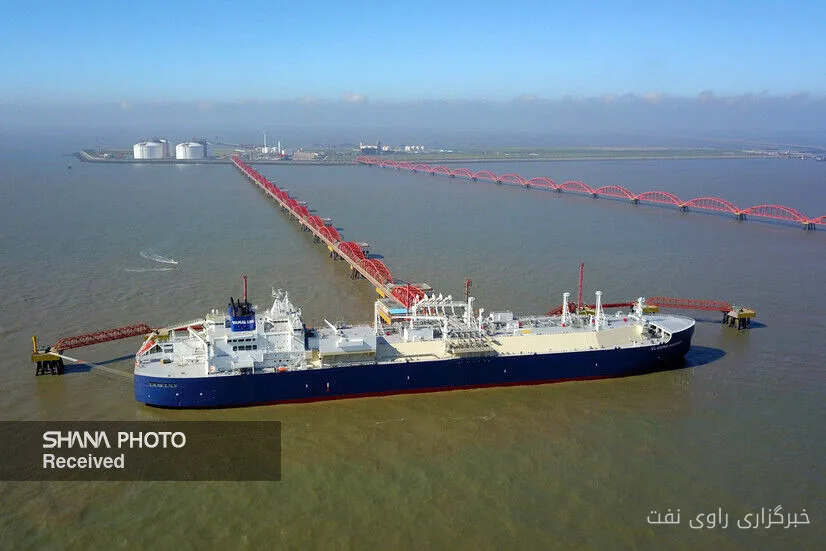
On the other hand, Qatar is facing serious limitations in LNG storage. LNG loading from Qatar in August decreased to 1.42 million tons, half of which was exported to Kuwait, and the remaining portion was stored in the Gulf ports. Reports indicate that about 3.44 million cubic meters, equivalent to 2.51 million tons of Qatar's LNG, are stored on 17 ships in the Gulf. This situation may force Qatar to choose between reducing production or utilizing onshore storage capacity.
The Strait of Hormuz has also become one of the key risk points in the global LNG market, and restrictions on traffic in this route have impacted Qatar's loading capacity. Currently, with one-fifth of the world's LNG supply facing disruption, buyers are facing serious challenges in securing new shipments. For this reason, buyers have moved towards diversifying the geographical sources of their supply to reduce supply risk.
Read more: Mohammad Reza Aref's appreciation for Fereydoun Yasemi, director of the National Oil Products Distribution Company in Tehran · Oil crisis in the global market with increased diesel margins in Asia