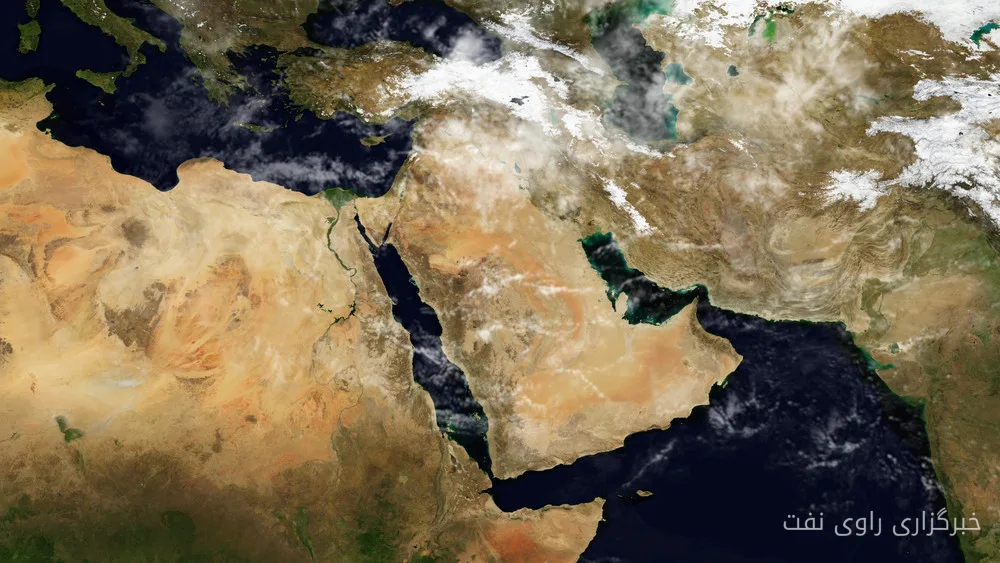
The formation of a defense block led by Turkey around Saudi Arabia is taking shape with the signing of the Mecca Agreement, which includes Saudi Arabia, Turkey, and Pakistan. This agreement is established to protect Saudi Arabia's oil infrastructure against attacks from Yemen's Ansar Allah (Houthis) and other security threats.
Details of the Mecca Agreement
The Mecca Agreement is recognized as the founding document of this block and is expected to be approved soon by the Turkish parliament. This security block is introduced as a Sunni ring against the Shia ring that Iran has created by forming groups like Hezbollah, the Houthis, and Iraqi militias.
Read more: Damien Bertin raised the need for accurate data in the maritime industry
Threats and Tensions in the Red Sea
Given the rising tensions in the region, Israel is considered a serious threat to this new block. Tel Aviv has attempted to convince Washington that Turkey, as the main pillar of this block, should be placed on the list of Western enemies. In this regard, Israel has taken actions including airstrikes in Syria and selling air defense systems to Greece.
The Red Sea is regarded as a vital passage for Saudi Arabia, as the East-West pipeline delivers crude oil to the port of Yanbu, which loaded about 2.5 million barrels per day in October. These attacks are conducted through the Suez Canal or Bab el-Mandeb.
The Houthis gained more control over the Yemeni Red Sea coast in September and are moving towards the strait. In this context, two camps are competing for control of this access point to the Red Sea: one camp includes Israel and the UAE in Somalia, and the other camp includes Turkey and Egypt in Somalia.
The UAE, which has exited the Mecca Agreement and has been at odds with Saudi Arabia since its exit from OPEC in May, has established military facilities at the port of Berbera in Somalia. Last December, Israel recognized Somalia as the first UN member state. This point is now being introduced as a new frontline.
Weeks after Israel's recognition of Somalia, the Houthis announced that they would target any Israeli presence there. Turkey's response to this Israeli action included the landing of several F-16 fighter jets in Mogadishu and the anchoring of two warships. Egypt, which has about 1,100 military personnel in the African Union mission in Somalia, will send another military brigade to the region.
Additionally, Turkey is seeking to exploit oil resources in the region, and its drilling rig is currently drilling its first deep-sea well 372 kilometers off the coast of Mogadishu under the protection of three Turkish warships.
Read more: Lloyd's Register's new solution for managing supply chain disruptions · Increase in oil prices due to the attack on Saudi Arabia's refinery