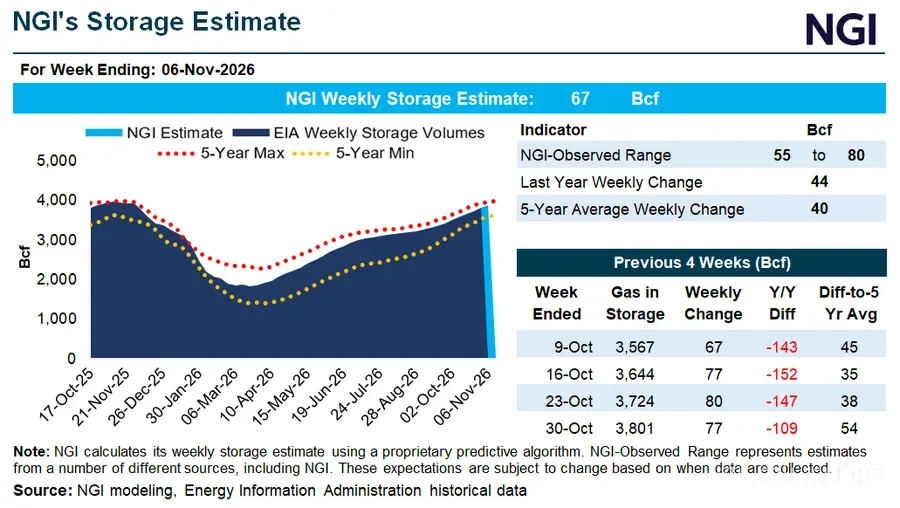
A recent report indicates that natural gas reserves in the United States are building up well due to rising temperatures in the fall. This situation has increased pressure on cash gas prices, with the weekly natural gas storage report from the EIA for the week ending November 6 expected to show an increase of 67 billion cubic feet (Bcf).
Decrease Compared to Last Week
This increase of 67 billion cubic feet represents a decrease of 10 billion cubic feet compared to last week, which was 77 billion cubic feet. This reduction is clearly influenced by weather conditions and relatively mild fall temperatures, leading to a decrease in heating demand and consequently a reduction in natural gas consumption.
Read more: Weekly Market Report of Lion Shipbrokers
Natural Gas Market Status
Given the market situation, cash natural gas prices are under pressure, and these developments could have long-term impacts on gas production and consumption in the United States. It is expected that as the cold season begins and the need for heating increases, pressure on natural gas reserves will rise. Additionally, price volatility in the natural gas market could influence investment and operational decisions in gas fields.
In this context, major natural gas fields in the United States, including the Appalachian shale gas field and the Eagle Ford gas field, play a key role in meeting domestic needs. The production capacity of these fields is approximately 34 billion cubic feet per day and 7 billion cubic feet per day, respectively. Given current conditions, it is essential for natural gas producers to adopt strategies that align with market changes.
Read more: Lotfollah Dehghani of the Islamic Republic has the capacity to build nuclear weapons · Forecast of a decrease in energy demand in Europe by Engie