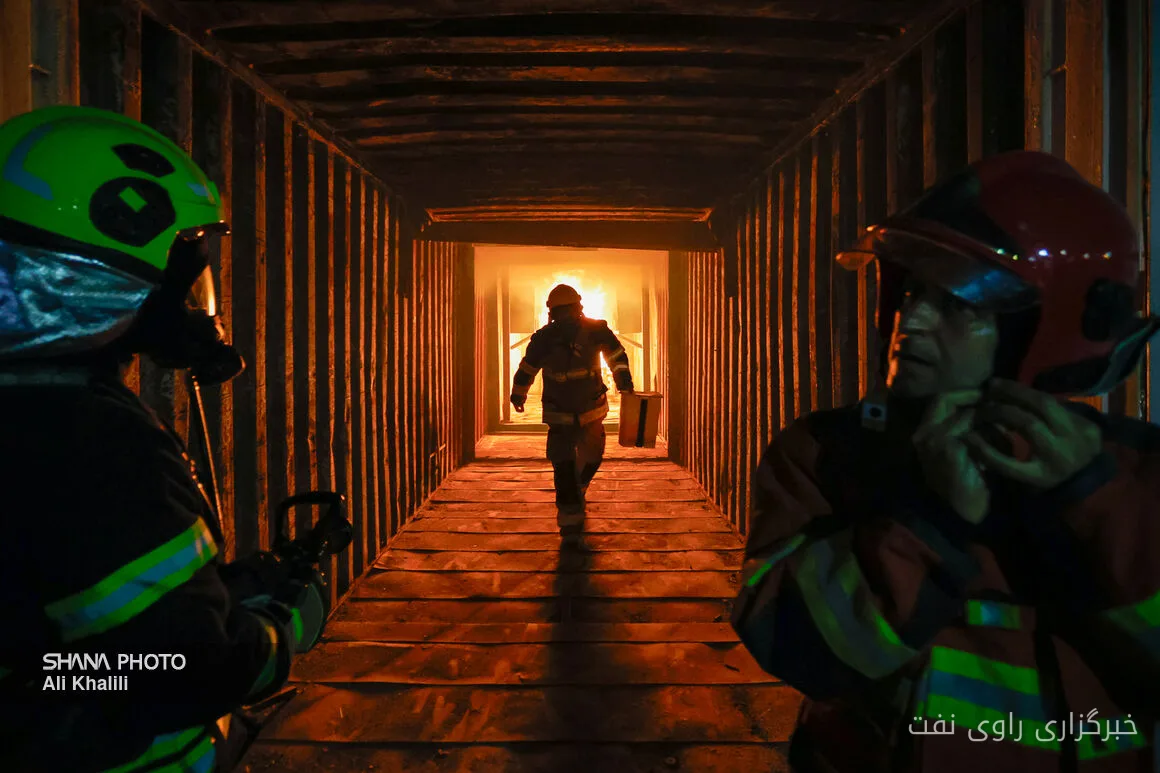
Damavand Petrochemical, with an annual production capacity of ١.٥ million tons of petrochemical products, was able to effectively control the fire that occurred in Phase ٢. Mehrdad Afshar, the HSE manager of Damavand Energy Persian Gulf Company, explained that after the fire broke out, four safety, firefighting, rescue, and operational teams quickly arrived at the scene.
Emergency Management
Afshar stated: "Given the volume of the fire and the specific conditions of the incident, the level of operations was elevated, and additional forces and necessary equipment were dispatched from neighboring units to the site. This effective support from operational teams allowed for a more robust firefighting operation."
Read more: Oil prices rise above $١١٠ due to supply concerns in the Persian Gulf
He also noted that a number of firefighters spontaneously arrived at the scene and helped increase operational capacity. This cooperation and unity in controlling the fire is commendable.
Challenges in Fire Management
Afshar continued: "One of the main challenges of this incident was its non-process nature. The fire was caused by an impact and attack, and there was a constant risk of repeated attacks. Therefore, scene management and the deployment of forces had to be conducted in a way that minimized the number of personnel at risk."
The head of HSE at Damavand Energy Persian Gulf Company emphasized that in such incidents, the concept of "golden time" differs from that of typical process incidents. In a process incident, the speed of initial response and the use of golden time to prevent the escalation of the incident is of special importance, but in this incident, maintaining the safety of personnel and managing their presence at the scene was more critical.
After controlling parts of the fire and reducing its intensity, the number of personnel present in the danger zone was gradually reduced to maintain operational capability while preventing the congregation of forces in the incident area.
The Role of Cooperation from Neighboring Units
Afshar, highlighting the bravery of firefighters in this incident, stated: "In addition to the possibility of repeated attacks, another challenge of the operation was the unclear nature of the danger in the early stages. The potential presence of chemicals or the release of hazardous materials and gases also needed to be considered in assessing the conditions."
He also referred to the role of cooperation from regional units, saying: "The firefighting teams from neighboring companies arrived at the scene as quickly as possible and provided effective support for the operation by offering personnel and equipment. This cooperation played a significant role in controlling the fire."
In conclusion, Afshar summarized that the speed of response, coordination among operational teams, support from neighboring units, and management of the number of personnel present at the scene were key factors in controlling this incident. Fortunately, with the implementation of safety measures, evacuation, and reduction of personnel in the danger zone, and phased management of the operation, no problems occurred for the firefighters and operational forces.
Read more: Citgo raised its operational profit forecast by $٢ billion · Process safety management at the National Petrochemical Company prioritizing the protection of employees' lives



