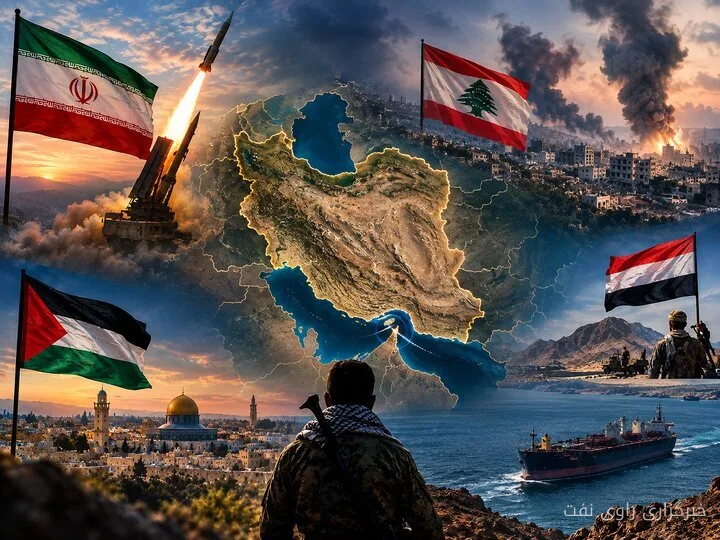
The Navy of the Islamic Republic of Iran reported a fire in a violating oil tanker in the eastern Strait of Hormuz. This news comes at a time when the security of maritime passage and the manner of vessel traffic in this strategic waterway are among the main points of tension between Iran and the United States.
Iran's Position in the Strait of Hormuz
Major General Ahmad Vahidi, the Commander of the Islamic Revolutionary Guard Corps, emphasized Iran's position on the security of the Strait of Hormuz, rejecting the intervention of extra-regional powers in this waterway and the Persian Gulf. This stance is framed within the Islamic Republic's emphasis on its role in ensuring regional security and opposing the military presence of foreign powers.
Read more: Offering of 456,000 tons of industrial and mineral products in the commodity exchange
Kazem Gharibabadi, Deputy Foreign Minister of Iran, pointed to the violation of Washington's commitments in the Islamabad agreement to end the war, stressing that the U.S. must take action to rectify the situation and return to its commitments. He also referred to commitments related to reopening the Strait of Hormuz in exchange for lifting sanctions and ending the maritime blockade of Iranian ports.
Readiness of Iranian Forces to Counter
The Commander of the Navy of the IRGC also spoke about readiness to confront American vessels and provided explanations regarding how to deal with ships that are considered violating by Iran. Mehrdad Akhlaghi, the proposed Minister of Defense and Armed Forces Support, met with Major General Vahidi in this regard and emphasized the importance of indigenous capabilities in meeting defense needs.
The Tasnim News Agency has examined the parliamentary process regarding the plan to organize the Strait of Hormuz; a plan related to ensuring security and sustainable development of this strategic waterway and the Persian Gulf. Pursuing this plan amid military tensions with the U.S. indicates the importance of the Strait of Hormuz in political and strategic discussions within the country.
Meanwhile, the Islamic Resistance of Iraq reported continued violations of the sovereignty of this country by American fighter jets. This issue remains a point of contention between resistance groups and regional governments with Washington.
Furthermore, Yahya Saree, the spokesman for the Armed Forces of Yemen, reacted to the threats from the Saudi coalition against Sanaa, warning that any attack on the capital of Yemen will face a severe response. He emphasized that a possible response could target the depth of Saudi territory and its capital.
The Ministry of Energy of Saudi Arabia also reported that a Yemeni missile struck one of the administrative buildings of Aramco in Dhahran. This ministry claimed that the attack resulted in a limited fire; however, reports indicate that Saudi officials are trying to downplay the scale of the attack.
Ultimately, recent developments in the Strait of Hormuz and its surroundings necessitate special attention and a thorough analysis of the current conditions. This region, due to its key role in global energy supply, remains at the center of international attention.
Read more: Facilitating financial support for the reconstruction of oil industry facilities by Hamid Bord · Reza Sepahvand considered smart fuel consumption management a solution to avoid gasoline imports



