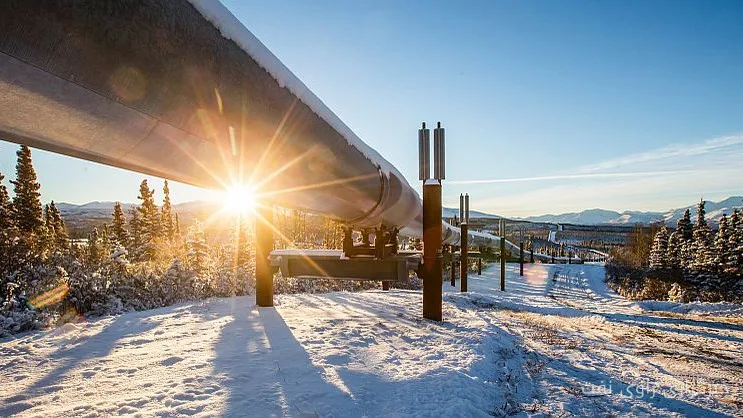
The liquefied natural gas (LNG) project in Alaska, with a capacity of 20 million tons per year, is currently seeking appropriate financing to continue its development. This project, recognized as one of the largest energy initiatives in the United States, is set to deliver natural gas from Alaska's gas fields to Asian markets and other parts of the world.
Details of the Alaska LNG Project
The Alaska LNG project, introduced in 2014, aims to exploit the rich natural gas resources in the Nikiski gas field and other fields in the northern Alaska basin. This project seeks to develop the necessary infrastructure for extracting and transporting natural gas to the shores of Alaska and then to international markets. It is expected that this project will soon become one of the main sources of natural gas supply for Asian markets.
Read more: Oil price rises to $101.63 amid supply threats
Challenges of Financing and Its Consequences
Financing the Alaska LNG project faces many challenges. High construction and infrastructure development costs and uncertainty in global gas markets are among these challenges. Experts believe that the success of this project depends on attracting investors and establishing suitable financial agreements. Without financing, this project may face serious delays in development, which could negatively impact the natural gas market.
Given the high capacity of this project and the increasing demand for natural gas in global markets, its financing is of special importance. Therefore, officials and investors must work together to find effective solutions for financing this project. Otherwise, Alaska may not be able to reap the economic and commercial benefits of this project.
Read more: OPEC discussed oil market stability with China and India · Natural gas prices drop in Appalachia and rise on the Gulf Coast



