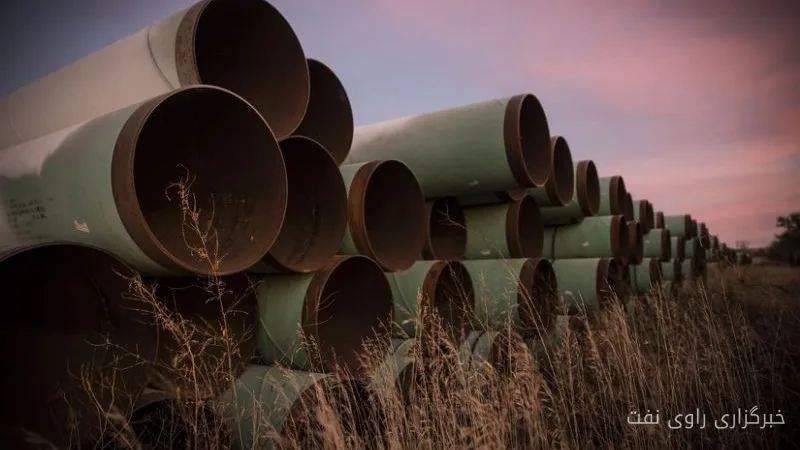
The temporary closure of Saudi Arabia's East-West pipeline, designed to bypass the Strait of Hormuz, has exacerbated another crisis in the global oil market, which has faced supply disruptions in the Middle East over the past six months. Initial assessments indicate that the damage to this pipeline is greater than initially thought.
Damage and Repair Timeline
According to reports, three pumping stations along the Saudi East-West pipeline were damaged in last week's attack. Previously, assessments had only mentioned damage to two stations. Industry sources say repairs may take between five to six weeks, although partial pumping may resume sooner. Before the attack, the system transported between 4 to 5 million barrels of oil per day (equivalent to 4 to 5 percent of global oil supply), with a total capacity of about 7 million barrels per day.
Read more: U.S. Crude Oil Inventory Drops to 423.4 Million Barrels
Economic Consequences and Price Increases
The closure of the East-West pipeline has pushed Brent crude prices to around $108 per barrel. This price increase is due to concerns about oil shortages in the market, especially as this pipeline was the largest oil export route in the Middle East. With the closure of this pipeline, crude oil inventories at the Yanbu port are only acting as a limited buffer. Inventories at this port have decreased by nearly 6 million barrels over the past two months, falling below 15 million barrels.
Analysts say that considering a capacity of 3.5 million barrels per day, a 15 million barrel inventory is only theoretically sufficient for just over four days of supply. Additionally, not every barrel in storage is accessible, and Saudi Arabia cannot continue exports without issues until the tanks are emptied.
The closure of the East-West pipeline has also forced Saudi Arabia to become more reliant on the Strait of Hormuz, which this pipeline was designed to bypass. This week, Saudi Arabia has sold up to 20 million barrels of oil in the open market, and buyers are expected to obtain these barrels via maritime transfer.
Ultimately, this disruption in the pipeline highlights deeper vulnerabilities in the market and the lack of reliable supply options. This situation clearly demonstrates that infrastructure not only provides resilience but also cannot eliminate geopolitical risks when it becomes a target of attacks. Given the reported damage to three pumping stations, restoring one of the most critical safety valves in the global oil market may be far more complex than initially thought.
Read more: Brent Crude Oil Price Reaches $104.24 · Continental Resources Signs Agreement to Develop Ayacucho 2 Field in Venezuela