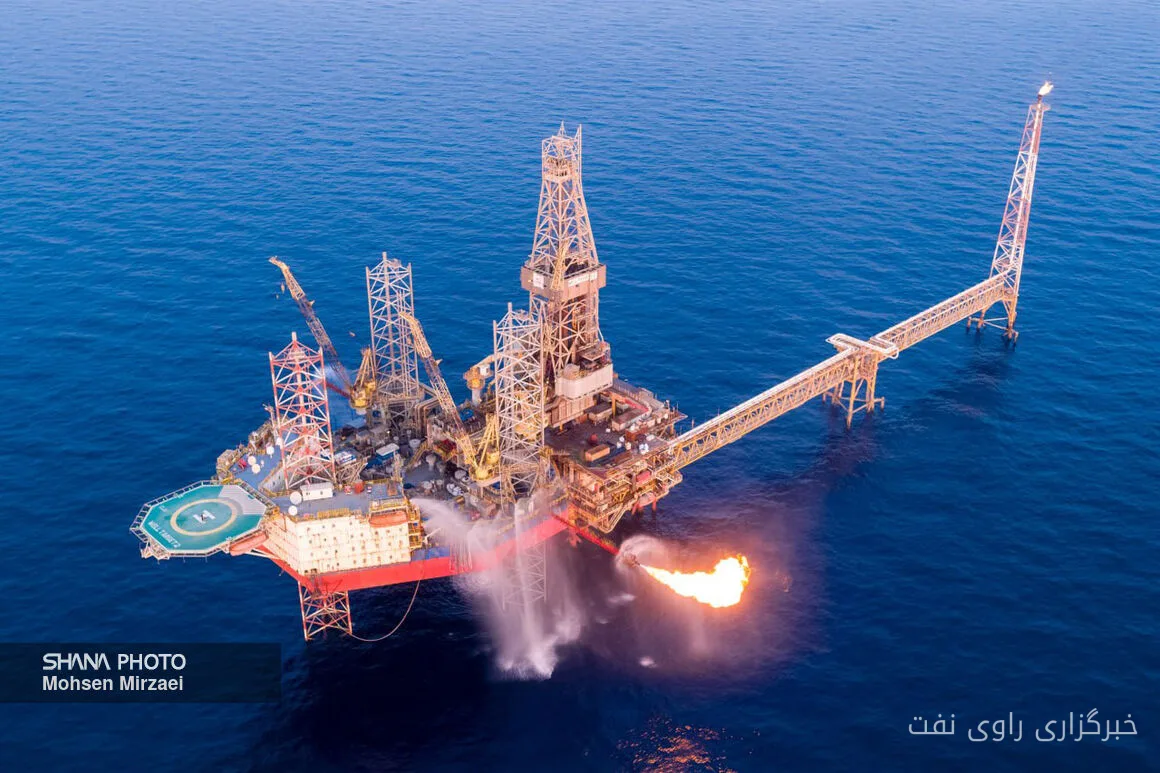
Phase 11 of the South Pars gas field, located in the waters of the Persian Gulf, as one of the largest shared gas fields in the world, continues its development process focusing on completing wells and increasing production capacity. Given the importance of this field in meeting the country's energy needs, measures have been taken to optimize and increase production.
Increase in Active Wells
At the SPD11B location, the number of active wells has increased from 4 to 12. This growth, along with the entry of the twelfth well into the production cycle, has led to achieving a daily production of over one billion cubic feet, equivalent to more than 28 million cubic meters of gas. This increase in production capacity reflects ongoing efforts to improve the performance of Phase 11 of South Pars.
Read more: Iraqi state oil company transported 2 million barrels of crude oil from the Strait of Hormuz
The Importance of Phase 11 in Meeting Energy Needs
Phase 11, as a vital part of the shared South Pars field, plays a key role in supplying natural gas for domestic use and export to neighboring countries. Given the increasing energy needs in the country and the importance of natural gas as a cleaner energy source, the development of this phase is of particular significance. The increase in production capacity in Phase 11 not only helps meet domestic needs but also strengthens the capability to export gas to foreign markets.
Ultimately, the development of Phase 11 of South Pars, in line with achieving macroeconomic goals and ensuring the country's energy security, relying on modern technologies and optimizing processes, is considered one of the important priorities of Iran's oil and gas industry.
Read more: Release of 100 million barrels of oil reserves by the G7 group · European Union examines delay in implementing methane law



