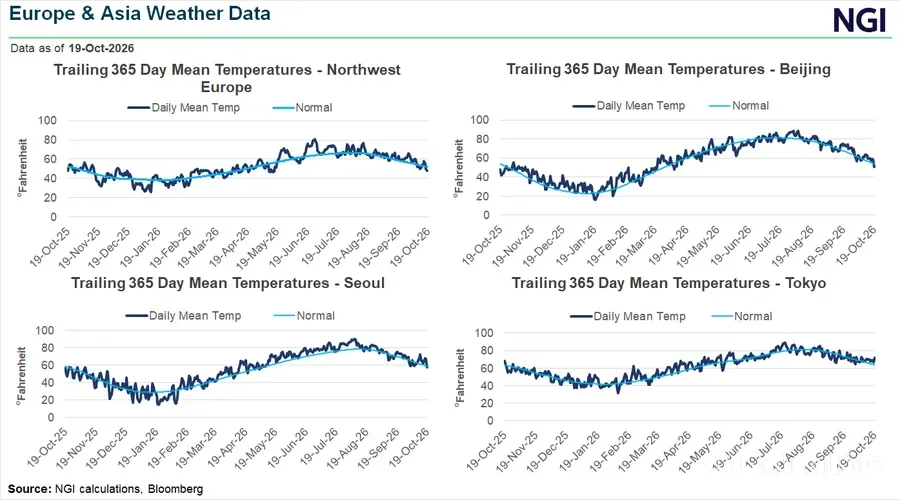
Weather forecasts on Tuesday indicated that heating demand in Europe will be significantly below normal, and weather patterns in northern Asia will continue at a typical level. This situation could have a profound impact on the demand for American liquefied natural gas (LNG).
Weather Situation in Europe
According to weather forecasts, lower-than-normal temperatures in many regions of Europe are expected to reduce the need for heating. This situation is particularly evident in the northern and eastern European countries, where temperatures are predicted to be lower compared to historical averages. This decrease in demand may lead to a reduction in LNG imports from the United States, as European countries seek sustainable and reliable energy sources.
Read more: 70% Growth in Port Infrastructure Market by 2032
Impact on Asia
In North Asia, weather patterns are largely at a seasonal level, and demand for liquefied natural gas in this region is also expected to be affected. Given these conditions, Asian countries may manage their energy supply through long-term contracts or local resources. This issue could also lead to reduced pressure on the U.S. LNG market.
Analysts believe that given these weather conditions, the U.S. LNG market may face new challenges. As demand decreases in Asia and Europe, American producers may have to seek new markets or adjust their sales strategies. These changes could lead to shifts in prices and global demand for liquefied natural gas.
Economic Consequences
A decrease in demand for U.S. LNG could have widespread effects on the country's economy. With reduced exports, producers may face greater financial challenges, which could impact employment and investment in this sector. Additionally, decreased demand may lead to changes in U.S. energy and trade policies.
Read more: China's Economic Growth Reached 4.5% in the Third Quarter · Brent and West Texas Crude Oil Prices on October 26, 1405



