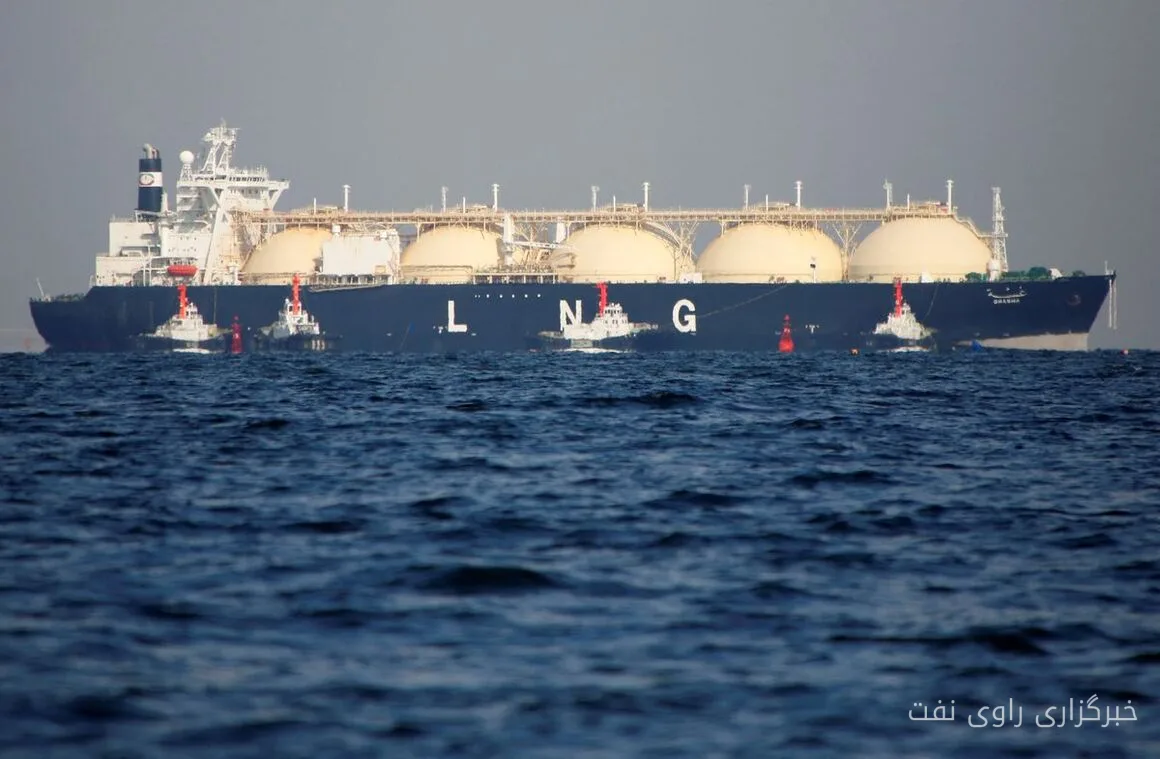
LNG demand in Asia has been on a declining trend for the second consecutive year. The war between the U.S. and the Israeli regime against Iran has limited supply from Gulf producers and driven prices to the highest levels in recent years. Analysts predict that LNG demand in Asia this year will decrease by 3 to 10 percent compared to 2025, with Northeast Asia accounting for the largest share of this decline.
Demand Decrease in Northeast Asia
Lou Ming Peng, an analyst at Rystad Energy, stated that a significant portion of the demand decrease has occurred in Northeast Asia, as this region has access to coal and nuclear energy. Given the mix of electricity supply sources, each country has been able to reduce its LNG demand. Additionally, the average temperature in several months of this year has been lower than last year, which has reduced the need for electricity generation.
Read more: Japan's dry bulk shipbuilding market dominated by a small group of builders
China and Price Impacts on Consumption
According to data from ship tracking company Kpler, China plays a significant role in the decrease of demand in Northeast Asia. It is expected that the country's consumption will decline by 6.1 million tons compared to last year due to the negative impact of rising prices on gas consumption in the industrial sector. Nelson Shiong, a market analyst, stated that energy-intensive industries such as ceramics and methanol production have been forced to reduce production or halt factory operations due to fuel costs.
Meanwhile, it is expected that the demand from urban gas distribution and chemical fertilizer production sectors in India will contribute to the increase in LNG demand in the country. These two sectors account for about 70 percent of India's total LNG imports.
Rystad Energy and Kpler predict that assuming Qatar Energy can resume its exports, LNG demand in Asia will return to around 280 million tons next year. However, prices will still be significantly higher than pre-conflict levels, and the average cash price of LNG is expected to reach $14.90 per million British thermal units by 2027.
Read more: Development of natural gas pipelines in the U.S. not aligned with demand growth · Future natural gas demand decrease after unexpected storage increase



