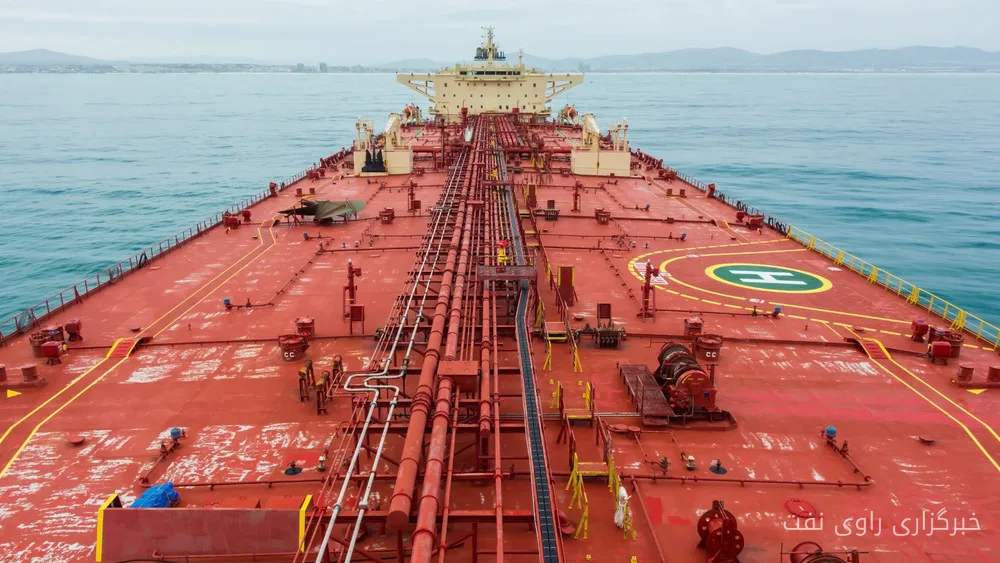
Crude oil exports from the Middle East reached their highest level since the start of the war with Iran in September 2023. Analyses of transportation and commodity market data show that this increase in supply occurs while Iranian attacks on shipping in the Strait of Hormuz continue. While the level of oil exports has increased, refinery bottlenecks that have driven up global diesel prices remain in place.
Increase in Exports and Refinery Challenges
Data released by the European Union on October 1 shows that diesel pump prices have reached their highest levels. Additionally, prices in the United States have risen as oil exports improve. Richard Mead, the editor-in-chief of the Load List, said in an online session on October 1, "More oil is coming from the Persian Gulf than was expected just a few months ago."
Read more: China Halts Fuel Exports Until Further Notice
Data from the Load List shows that since mid-July, the number of crude oil tankers passing through the Strait of Hormuz has steadily increased. This coincides with a sudden drop in exports due to the collapse of the Iran-U.S. agreement to end the conflict. JPMorgan investment bank reported that crude oil exports from the Middle East reached 98% of pre-war levels in September, describing it as a "remarkable recovery for a region still engaged in war."
Factors Influencing Export Recovery
Commodity analytics firms like Kpler report that Saudi oil exports have reached an average level for 2025. In this context, maritime intelligence company Windward stated that Saudi terminals have loaded four times more oil than in August, which is a significant increase, but still nearly 40% less than in January. Several factors appear to be behind this recovery, including the Saudi East-West pipeline and the use of shuttle ships and ship-to-ship oil transfers. The pipeline, which transports its crude oil to the port of Yanbu on the Red Sea, was damaged on September 10 in an attack by Iranian-backed Houthi militants.
However, the increase in attacks from Yanbu late in the month indicates that the pipeline has regained at least part of its operational capacity. The United Arab Emirates has also found a similar solution, using a pipeline to the port of Fujairah in the Gulf of Oman. This pipeline has been targeted in Iranian attacks but is less vulnerable than the Strait of Hormuz.
Another route to market involves the use of small shuttle ships to transport crude oil through the Strait of Hormuz, using a route close to the shores of Oman and under the supervision of the U.S. Navy. These ships, which often travel in a convoy, transfer their cargo securely in the Gulf of Oman to tankers. Meanwhile, Indian refineries have reported that they are directly using this route.
Concerning Trends in Shipping
Despite the increase in exports, risks for shipping have not diminished. In the latest incident, three tankers flying the Liberian flag were targeted by unknown gunfire while passing through the Strait of Hormuz on September 30. Industry analysts believe that these risks are naturally factored into prices. "An increase in exports does not mean that the Strait of Hormuz has become safe. It simply shows that the oil industry has adapted to working around this risk," Mead said.
Oil prices have decreased from recent peaks, but refinery bottlenecks remain a global problem. According to the International Energy Agency, most of this issue exists in the Persian Gulf. Iranian attacks on refineries, combined with disruptions in shipping in Hormuz, have led to reduced production. The International Energy Agency wrote: "In 2025, Middle Eastern producers exported 3.3 million barrels per day of refined oil products. However, since the start of the conflict, up to 3 million barrels per day of refining capacity has been rendered unusable." This global diesel shortage has been exacerbated by Ukraine's attacks on Russian oil refineries, leading to a diesel export ban imposed by the Kremlin. The International Energy Agency warned: "Refineries around the world are currently operating at maximum capacity. This leaves few options to prevent further tightening of supply and rising prices in the coming months."
Read more: U.S. Government Threatens Diesel Export Ban If European Reserves Are Not Released · Return of Middle Eastern Oil Flow to Pre-War Levels According to JPMorgan and Goldman Sachs Assessment



