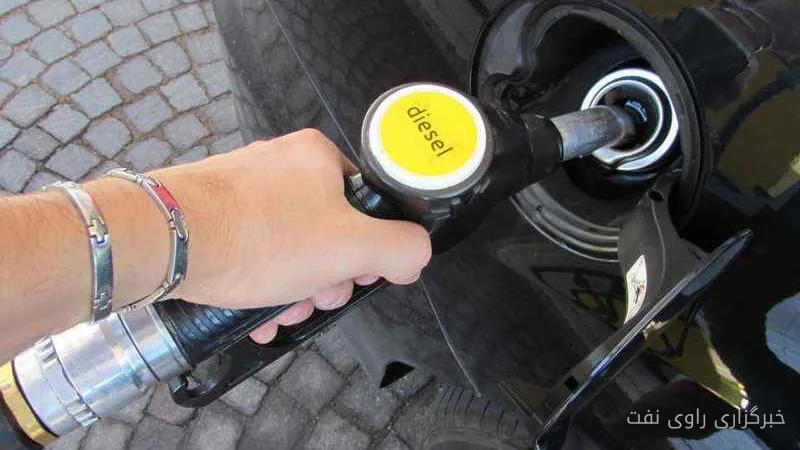
This week, China announced that it will halt all fuel exports this month to meet domestic needs. This comes as U.S. President Donald Trump has urged Germany and France to release 120 million barrels of diesel from their reserves, or face a ban on diesel exports from the United States.
Diesel Shortage in Europe
Europe is currently facing a diesel supply crisis. Diesel, as the main fuel for heavy machinery, agriculture, and freight transportation, plays a vital role in the economy. While gasoline prices in the European Union have risen by 29% since the beginning of this year, diesel prices have also increased by 40%.
Read more: Mohammad Reza Najafi Manesh considers sanctions as targeting car production
Diesel Import Situation
According to published reports, diesel imports to Europe last month fell to their lowest level in September history, averaging 1 million barrels per day. This amount is 600,000 barrels per day less than diesel imports in September 2025. Additionally, diesel inventory at sea for Europe is over 25% lower than last year's level, indicating weak inflows to the region in October.
Local fuel production at European refineries also decreased in September due to maintenance schedules. This maintenance delay, due to the need to supply fuel for the tight market, resulted in a reduction of 600,000 barrels in refinery production compared to August. Experts warn that this delay may lead to more unexpected shutdowns in fuel production.
Diesel prices are rising globally, and this has become a sensitive issue, especially in the United States, which is the largest foreign fuel supplier to Europe. For this reason, Trump has asked France and Germany to release diesel from their reserves to avoid a U.S. diesel export ban.
Overall, the combination of problems arising from sanctions on Russia and China's export restrictions has fueled the diesel crisis in Europe. Furthermore, the European Union has about 39 million tons of diesel, equivalent to more than two months of consumption for the bloc. This situation, due to historical policies including tax advantages, has led to a significant reliance of the European vehicle fleet on diesel.
Read more: Non-farm employment in the United States decreased with 29,000 new jobs · The German government asked SEFE to add 8 terawatt hours of gas to its reserves



