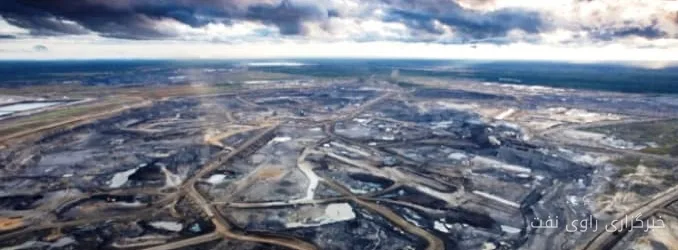
Canada's oil sands production is projected to average 3.5 million barrels per day (MMbpd) in 2026, representing an increase of nearly 100,000 barrels per day, equivalent to 3 percent, compared to 2025. This forecast is based on the latest 10-year production outlook report from S&P Global Energy.
Continuous Production Growth
Canada's oil sands production has significantly increased since 2001, when it was about 300,000 barrels per day, and only experienced an annual decline in 2020 due to the impacts of the COVID-19 pandemic. Production is expected to continue to 3.9 million barrels per day by the early 2030s.
Factors Influencing Production Growth
Most of the anticipated growth for 2026 will be due to the optimization of existing operations. However, improved investment conditions could facilitate a return to new construction and enhance long-term growth potential. According to Kevin Birn, Senior Analyst for Canadian Oil Markets at S&P Global Energy, the question today is not whether oil sands will continue to grow, but how much additional growth may be achieved through new project offerings.
S&P Global has pointed to proposed increases in pipeline export capacity, changes in carbon pricing, efforts to expedite national project reviews, and potential changes in financial conditions as factors that could impact future investments. New projects require significant investment and longer development times compared to optimizing existing facilities.
In its current forecast, S&P expects oil sands production to stabilize after reaching 3.9 million barrels per day in the early 2030s. However, the company estimates that nearly 500,000 barrels per day of additional production capacity may progress beyond the projects included in its base forecast.
Celina Hwang, Director of Canadian Crude Markets at S&P Global Energy, stated, "This estimate includes the projects we expect to be the most attractive and quickest. Given the right conditions and timing, the potential could be greater."
Read more: U.S. Strategic Oil Reserves Hit Lowest Level Since 1982 · 60 Percent Increase in Oil Flow from Strait of Hormuz with Tanker Passage



