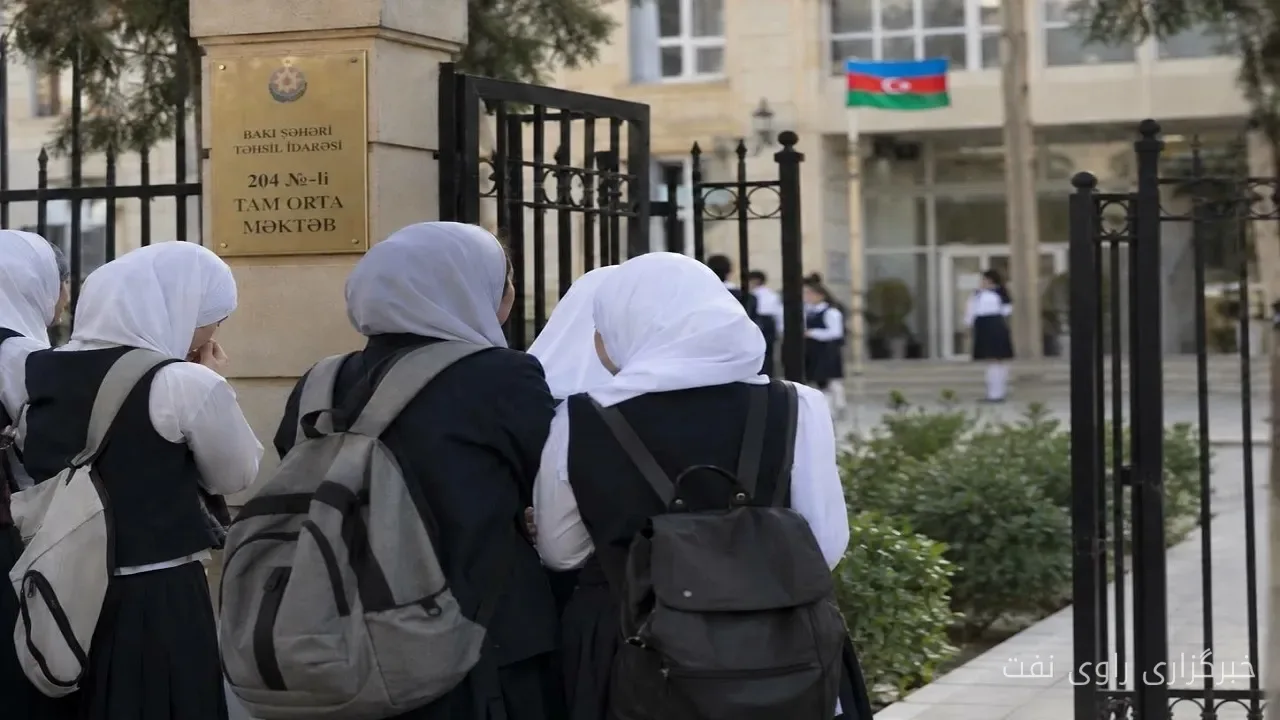
The ban on the entry of hijab-wearing students and teachers into schools in Azerbaijan in September and October 2023 has sparked serious discussions and controversies in society. The government of Azerbaijan justifies this action in the name of secularism and public order, but critics believe that these regulations lead to serious restrictions on hijab and the right to education.
Background and Dimensions of the Controversy
The issue of dress in Azerbaijani schools has become one of the challenging topics that relates not only to educational aspects but also to religious freedom and human rights. While the government insists that this decision is made to maintain social order and discipline, critics see it as an attempt to impose secular values on society. These restrictions, especially regarding hijab, seem to directly contradict individual choice and religious freedoms.
Read more: Comprehensive Guide to Port Calls and Marine Traffic Data Analysis
Reactions and Consequences
Reactions to these new regulations have spread widely in the media and social networks. Many human rights activists and ordinary citizens have protested the issue and called for a review of these regulations. These protests indicate that the issue is not just about dress in schools, but also about fundamental rights and individual freedoms. For this reason, this topic could be seen as a turning point in the political and social history of Azerbaijan.
Some observers believe that this decision could have negative consequences on the educational and social processes of the community. In fact, the inability of hijab-wearing students to attend school could lead to an increase in dropout rates and consequently a decrease in literacy levels in society. This is while the right to education and access to learning is considered one of the fundamental human rights.
Read more: Disruption in the Mountaineer XPress Pipeline Affects Appalachian Natural Gas Prices · Training Course on Rescue and Relief for Women in the Oil Industry Basij